
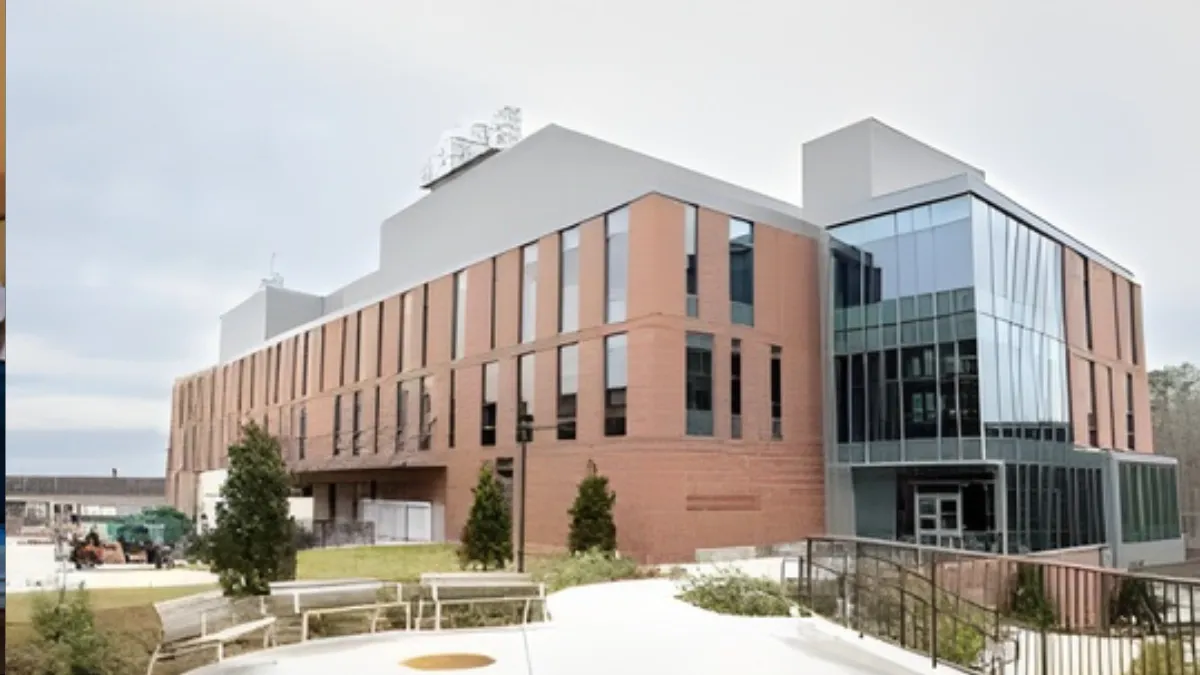
The Advanced Materials Complex has officially opened at Clemson University, marking a major milestone in advanced materials research and education.
This Advanced Materials Complex spans 150,000 square feet and brings together multiple scientific disciplines into one centralized, cutting-edge facility designed to support innovation across industries like aerospace, healthcare, electronics, energy, and transportation.
A Unified Space for Multidisciplinary Excellence
Previously, Clemson’s materials-related departments—Materials Science and Engineering, Chemistry, and Chemical and Biomolecular Engineering—were spread across different locations and even separate colleges.
The Advanced Materials Complex now integrates these departments into one modern building, encouraging collaboration between the College of Science and the College of Engineering, Computing and Applied Sciences.
This centralization enhances multidisciplinary research, strengthens Clemson’s status as an R1 research institution, and positions South Carolina as a growing leader in the advanced materials industry.
What Are Advanced Materials?
Advanced materials are engineered by manipulating substances at the atomic or molecular level to create enhanced properties such as strength, conductivity, and responsiveness. Unlike natural materials, these are specifically designed for high performance.
Examples include:
- Carbon fiber composites
- Ceramic polymers
- Nanoparticles with unique optical traits
- Biomaterials used in medicine
These innovations are transforming industries by enabling lighter, stronger, and more efficient products.
Industry Applications Driving Innovation
The Advanced Materials Complex supports research impacting several high-growth sectors:
Aerospace
Carbon fiber composites and superalloys improve aircraft durability while reducing weight, boosting fuel efficiency.
Healthcare
Biomaterials and smart materials are used in implants, prosthetics, and drug delivery systems for personalized treatments.
Electronics
Nanomaterials and conductive polymers enable faster, smaller, and more efficient devices, including smartphones and advanced computing systems.
Energy
Materials like silicon carbide and perovskite solar cells enhance renewable energy generation and storage efficiency.
Transportation
Lightweight alloys and shape-memory materials improve electric vehicle performance and range.
Inside the Advanced Materials Complex
The Advanced Materials Complex features a modern four-story structure made of brick, steel, and glass, located at the heart of Clemson’s campus. It includes:
- A three-story atrium known as the KYOCERA AVX Lobby
- State-of-the-art teaching laboratories
- A 140-seat auditorium
- ADA-compliant lab stations
- Advanced ventilation systems ensuring safety
More than 300 researchers and graduate students will work in the facility, while over 12,000 students are expected to use the labs annually.
Cutting-Edge Learning Facilities
Students benefit from hands-on experience with the latest technologies:
Bishop Family Teaching Lab
Equipped with advanced 3D printers capable of working with plastic, carbon fiber, and steel—preparing students for careers in manufacturing and design.
Kekas Family Teaching Lab
Features high-tech chemistry stations with glass-protected setups and options for working under UV or colored lighting.
Norville Family Teaching Lab
Provides additional advanced tools to support innovation and experimentation.
Additional features include a lab coat cleaning service and highly efficient air circulation systems, ensuring safety and convenience.
Economic and Educational Impact
The Advanced Materials Complex plays a crucial role in workforce development and economic growth. In South Carolina alone, the advanced materials sector generated:
- 5,800 job announcements
- $1.7 billion in capital investments (2017–2025)
Enrollment in related disciplines has increased by over 25% in the past decade, reflecting rising demand for skilled professionals.
The facility also supports Clemson’s long-term strategy, “Clemson Elevate,” which aims to double research expenditures by 2035 and expand research space significantly.
A Glimpse Into the Future
Experts believe the next two decades will bring advancements in advanced materials that surpass a century of progress seen during the Industrial Revolution. With the integration of AI, innovation in this field is expected to accelerate even further.
The Advanced Materials Complex is designed to be at the forefront of this transformation, fostering collaboration between academia, industry, and government agencies to drive breakthrough discoveries.
The Advanced Materials Complex represents a transformative step in research, education, and industry collaboration. By bringing together cutting-edge technology, interdisciplinary expertise, and modern infrastructure, Clemson University is shaping the future of innovation.
This facility not only enhances academic opportunities but also strengthens economic growth and global competitiveness.
As students and researchers explore new possibilities within this space, the impact of the Advanced Materials Complex will extend far beyond campus—into industries and communities worldwide.