
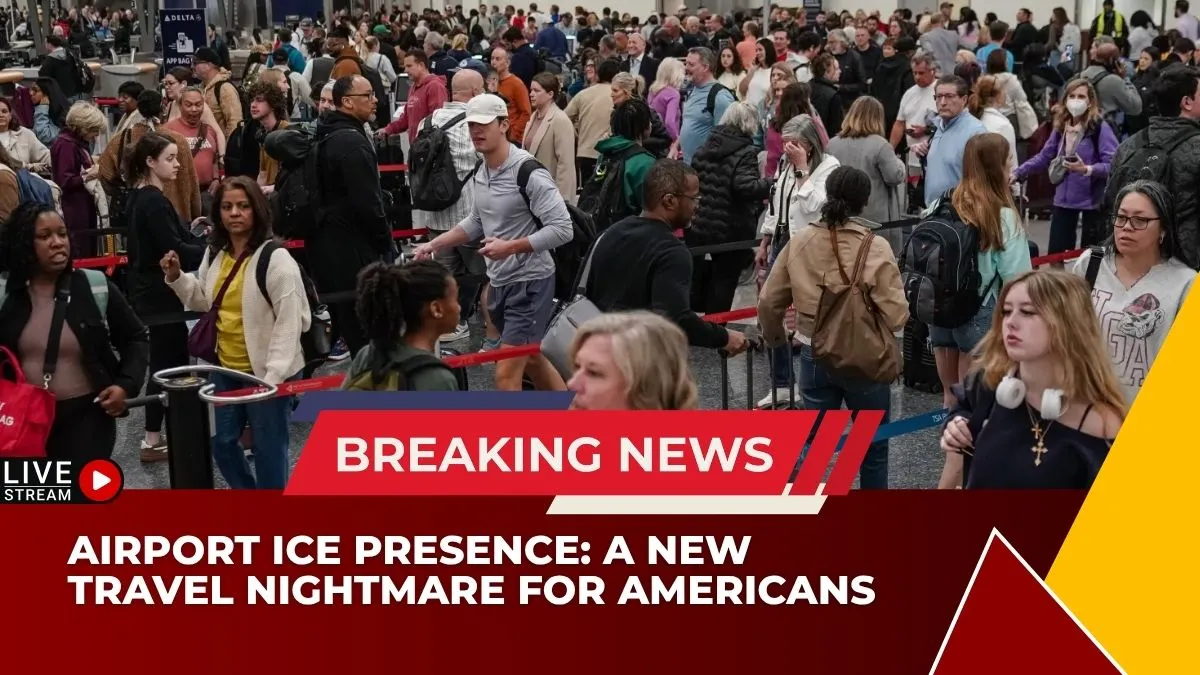
The airport ICE presence has quickly become one of the most concerning developments for U.S. travelers in 2026.
What was already a stressful flying experience has now intensified, as Immigration and Customs Enforcement agents are being deployed at major airports across the country.
Why the Airport ICE Presence Is Increasing?
The rise in airport ICE presence is directly tied to a severe staffing crisis within the Transportation Security Administration (TSA).
Due to a prolonged government shutdown that began in mid-February, thousands of TSA officers have been working without pay.
As a result:
- Over 3,200 TSA officers (around 11%) failed to report to work
- Many remaining officers continued working unpaid
- Hundreds have resigned or taken leave due to financial hardship
To manage this shortage, federal authorities introduced ICE agents into airport operations to handle basic tasks like checking IDs and monitoring passenger flow.
How Airport ICE Presence Is Affecting Travellers?
The growing airport ICE presence has significantly changed the travel experience for passengers.
1. Increased Anxiety Among Travellers
Many American citizens, who typically do not expect interaction with immigration enforcement, are now encountering ICE officers in domestic airport settings. This has led to heightened fear and discomfort.
2. Longer Wait Times
With fewer trained TSA agents available:
- Security lines have stretched to 3–4+ hours in some airports
- Passengers are missing flights or arriving extremely early
- Airport congestion has reached record levels
3. Confusion Over Roles
ICE agents are not trained in aviation security like TSA personnel. Their presence has blurred the line between immigration enforcement and airport screening duties.
Concerns Over Training and Public Trust
One of the biggest criticisms of the airport ICE presence is the lack of specialized training.
- TSA officers undergo months of security training
- ICE agents are primarily trained for immigration enforcement
- Their airport roles are limited to non-specialised tasks
Despite this, many travelers remain uneasy. Critics argue that replacing trained security officers with less-prepared personnel could compromise safety and efficiency.
Additionally, ICE has faced public trust issues in recent years, which further intensifies discomfort when travellers encounter them in airports.
Political Gridlock Behind the Crisis
The airport ICE presence is also a result of ongoing political conflict in Washington.
- Funding for the Department of Homeland Security (DHS) has stalled
- Disagreements over immigration policies have delayed TSA payments
- Lawmakers remain divided on reforms related to ICE operations
This deadlock has prolonged the shutdown, worsening staffing shortages and forcing temporary solutions like deploying ICE agents.
Real-Life Impact on TSA Workers
Behind the airport ICE presence lies a deeper issue—the financial hardship faced by TSA employees.
Reports indicate that many TSA workers:
- Are struggling to pay rent or mortgages
- Have resorted to extreme measures like selling personal belongings
- Face eviction or financial instability
This crisis has directly contributed to absenteeism and resignations, further increasing reliance on ICE personnel.
Is the Airport ICE Presence a Long-Term Solution?
Most experts agree that the airport ICE presence is only a temporary fix.
While ICE agents may help reduce immediate pressure by handling minor tasks, they cannot replace trained TSA officers. Without proper funding and staffing restoration, airport disruptions are likely to continue.
The rise of airport ICE presence highlights a deeper systemic issue within U.S. aviation security. What began as a staffing solution has evolved into a controversial and stressful reality for travelers.
With long wait times, unclear roles, and growing public concern, the situation underscores the urgent need for political resolution and proper funding. Until then, passengers can expect continued disruptions—and a very different airport experience than before.