
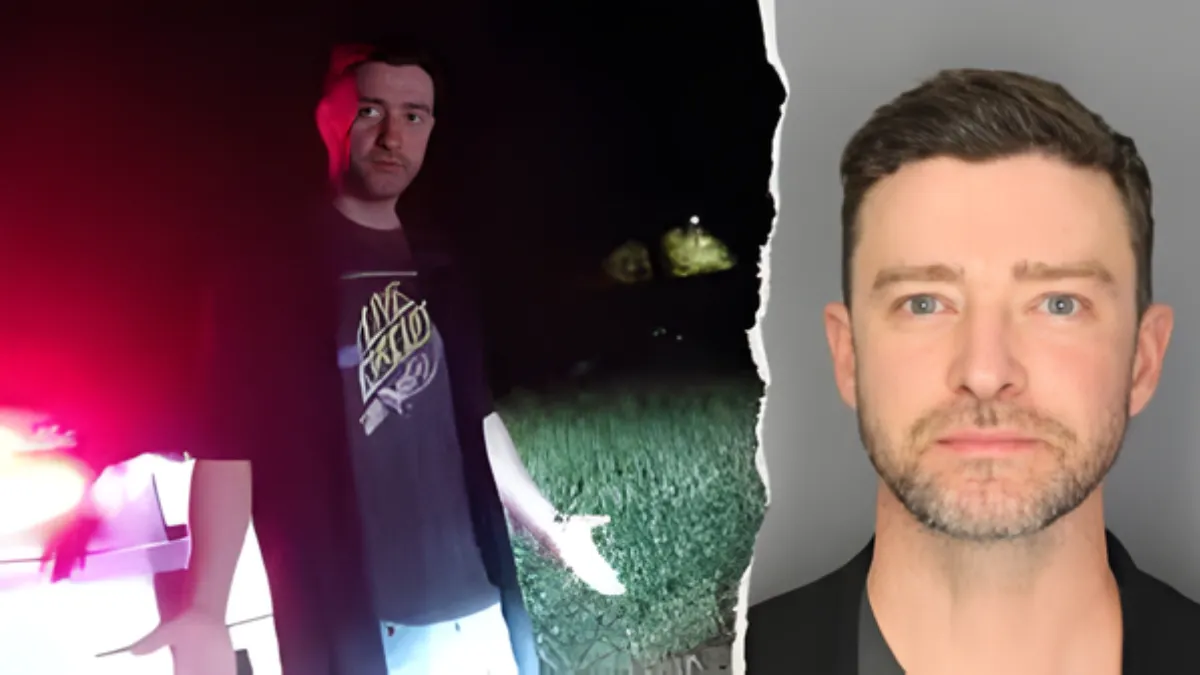
The Justin Timberlake DWI case has resurfaced in headlines after newly released body camera footage shed light on the pop star’s 2024 arrest.
Justin Timberlake was seen interacting with police officers during the incident, which took place in Sag Harbour, New York.
The footage, released following a legal agreement, offers a clearer view of what happened that night while still protecting certain privacy elements.
Body Cam Footage Release After Court Agreement
After initially attempting to block the footage, Justin Timberlake’s DWI case developments took a turn when the singer settled with local authorities. On March 20, 2026, Timberlake agreed to allow a redacted version of the video to be made public.
Court documents confirmed that the released footage would not create an “unwarranted invasion of personal privacy.” Authorities were permitted to lift the temporary restraining order and share edited visuals of the arrest.
What Happened During the Traffic Stop?
The Justin Timberlake DWI incident dates back to June 18, 2024, when the singer was pulled over after leaving a popular restaurant in Long Island. During the stop, Timberlake told officers he was simply following friends home and mentioned he was on a world tour.
At one point, he identified himself by saying, “I’m Justin Timberlake,” when officers sought clarification. He also explained that he was driving a rental car at the time.
Police requested his license and registration before asking him to step out of the vehicle to assess whether he was fit to drive.
Sobriety Tests and On-Scene Reactions
As part of the Justin Timberlake DWI investigation, officers conducted several field sobriety tests. Timberlake can be heard in the footage commenting, “These are hard tests,” while appearing visibly nervous.
He also stated that his heart was racing as officers shined a light into his eyes during the examination. According to police, he failed multiple tests, which led to further action.
Arrest and Interaction with Passengers
The Justin Timberlake DWI footage also shows interactions with passengers in the vehicle, including designer Estee Stanley. She questioned officers about the situation and even offered to drive instead.
In a moment captured on video, she appealed to the officers by referencing Timberlake’s hit songs like “Bye Bye Bye” and “SexyBack”, asking for leniency.
Despite her efforts, officers proceeded with the arrest, stating that Timberlake had already been driving and failed sobriety checks. He was then handcuffed and taken into custody, while Stanley was later allowed to drive the car home.
Legal Charges and Plea Deal
Initially, the Justin Timberlake DWI case included one count of driving while intoxicated, along with citations for running a stop sign and failing to maintain lane discipline.
Timberlake’s lawyer argued that he was not intoxicated at the time. However, in September 2024, the singer accepted a plea deal, agreeing to plead guilty to a lesser charge.
This legal resolution helped conclude the criminal aspect of the case, though public interest remained high, especially regarding the release of the footage.
Attempt to Block Footage Release
Before the settlement, Timberlake had filed a petition in court to prevent the release of the video. He argued that making the footage public would damage his reputation and expose him to unnecessary scrutiny.
The petition claimed that the footage could lead to harassment and would not serve any meaningful public interest. Despite these concerns, the final agreement allowed a redacted version to be shared.
Public and Media Reaction
The release of the Justin Timberlake DWI footage has sparked widespread discussion online and in media circles. Fans and critics alike are analyzing the video, with some expressing sympathy while others question the incident.
The case highlights the ongoing tension between celebrity privacy and public accountability, especially when legal matters are involved.
The Justin Timberlake DWI case remains a significant moment in the singer’s public life, combining legal proceedings, media attention, and personal scrutiny.
The release of the body cam footage provides transparency while balancing privacy concerns through redactions.
Ultimately, the incident serves as a reminder of how quickly public figures can find themselves under intense examination, and how legal resolutions do not always end public interest.