
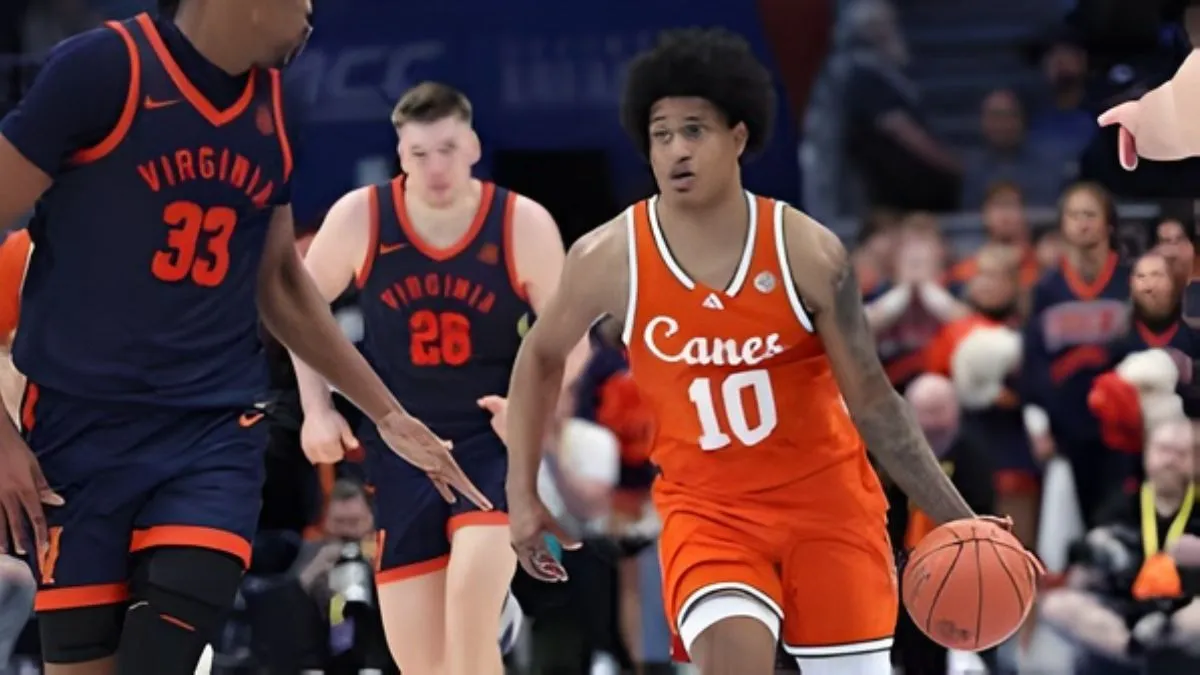
The Mizzou vs Miami matchup in the NCAA Tournament Round of 64 ended in disappointment for the Missouri Tigers, who struggled offensively and ultimately fell to the Miami Hurricanes.
Despite strong crowd support and a late-game push, Missouri couldn’t sustain enough momentum to secure a win.
Slow Start Hurts Missouri Early
From the opening minutes of the Mizzou vs Miami game, Missouri appeared out of sync. Even with a crowd filled with black and gold at Enterprise Arena, the Tigers couldn’t translate that energy into performance.
Miami’s fast-paced approach disrupted Missouri’s rhythm, leaving players like Jayden Stone searching for offensive answers.
The Tigers faced difficulty creating space, and their shooting lacked consistency. As a result, their offensive execution looked sluggish and ineffective, allowing Miami to gain early control of the game.
Paint Struggles and Rebounding Issues
A key factor in the Mizzou vs Miami contest was Missouri’s inability to dominate the paint. Throughout the season, Mark Mitchell had been a crucial presence inside, but Miami successfully neutralized him.
In the first half, Missouri managed just ten points in the paint—a stark contrast to their usual performance. Additionally, rebounding proved to be a major weakness. It took nearly 13 minutes for the Tigers to secure their first offensive rebound.
Miami capitalized heavily on second-chance opportunities, finishing with 19 second-chance points compared to Missouri’s mere two. The Hurricanes also controlled the boards with a total of 46 rebounds, highlighting their physical dominance.
Head coach Dennis Gates acknowledged this issue, emphasizing that failing to secure rebounds significantly impacted the outcome.
Mark Mitchell Contained Early
Another defining moment in the Mizzou vs Miami game was Mark Mitchell’s slow offensive start. It took nearly 17 minutes for him to score his first points, largely due to Miami’s defensive strategy.
Mitchell explained that double teams and defensive pressure forced him to pass early, preventing him from finding his rhythm. Although he eventually contributed by hitting three three-pointers and attacking the basket, the delayed impact hurt Missouri’s chances.
Despite his efforts, the combined contributions from Mitchell, Jayden Stone, and Robinson were not enough to overcome Miami’s consistent performance.
Second-Half Fightback Falls Short
Missouri showed resilience in the second half of the Mizzou vs Miami matchup. With around ten minutes remaining, the Tigers began to build momentum.
Anthony Robinson II sparked the comeback with a three-pointer, followed by a forced turnover and an and-one play from Jayden Stone. Free throws from Trent Pierce helped Missouri briefly take the lead—their first since early in the game.
However, this surge was short-lived. Miami responded quickly, regaining control with timely shooting and composure under pressure.
Tre Donaldson Leads Miami’s Charge
In the closing stages of the Mizzou vs Miami game, Tre Donaldson emerged as a decisive factor. He connected on five three-pointers, including four in the second half, effectively shutting down Missouri’s comeback hopes.
Miami’s ability to maintain efficiency was reflected in their impressive 1.212 points per possession. This performance improved their record to 26-3 when scoring above one point per possession, showcasing their offensive consistency.
Missouri’s Key Takeaways
The Mizzou vs Miami loss highlighted several areas of concern for Missouri:
- Lack of offensive consistency throughout the game
- Inability to control rebounds and second-chance points
- Over-reliance on late-game momentum
- Struggles to adapt quickly to Miami’s defensive pressure
Coach Gates pointed out that games often come down to a single possession, referencing previous close losses against Arkansas and Kentucky. Unfortunately, Missouri couldn’t capitalize on crucial moments once again.
The Mizzou vs Miami game served as a reminder that strong finishes alone aren’t enough to win in high-stakes tournaments.
While Missouri showed determination in the second half, their slow start, rebounding struggles, and inability to contain Miami’s shooters ultimately sealed their fate.
Moving forward, the Tigers will need a more balanced and consistent performance across all forty minutes to compete at this level.