
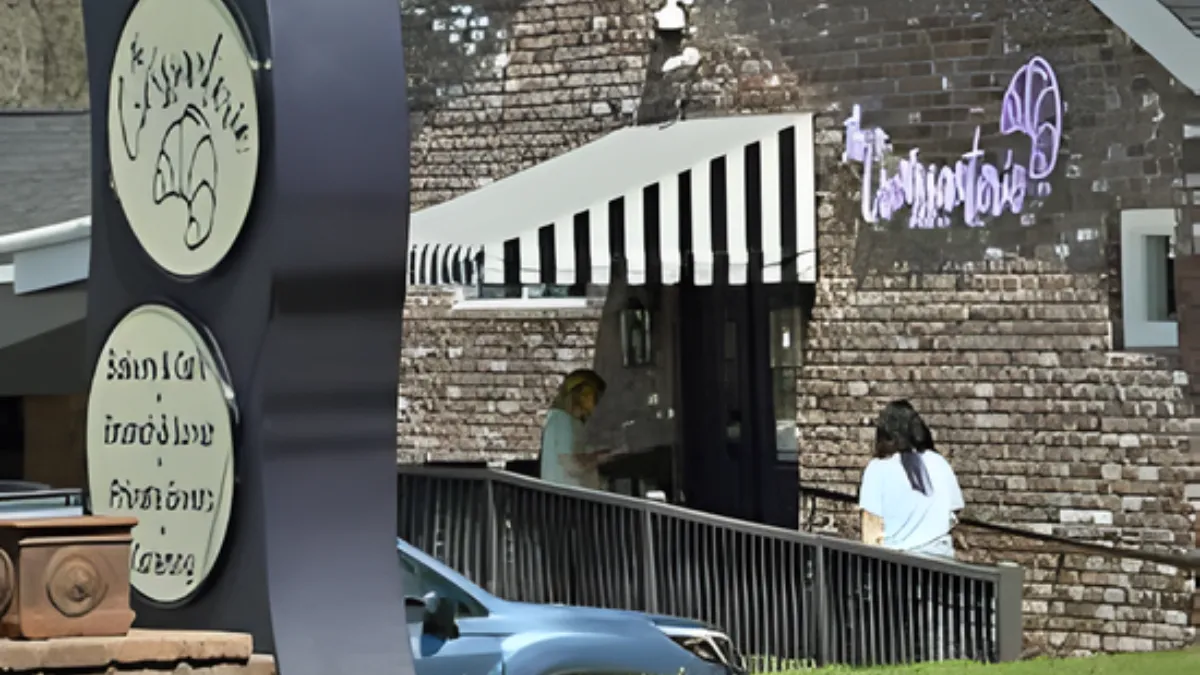
The Sanders restaurant incident involving Sarah Huckabee Sanders has sparked widespread discussion after claims surfaced that she was asked to leave a Little Rock dining spot.
The situation has drawn attention due to differing accounts from the governor’s office and the restaurant, creating a debate around hospitality, politics, and business decisions.
Background of the Sanders Restaurant Incident
According to official statements, the Sanders restaurant incident occurred on March 13 when Governor Sanders visited The Croissanterie in Little Rock for lunch.
She was accompanied by two guests and members of her State Police Executive Protection Detail.
The governor’s office reported that the group had already been seated, served, and had spent over an hour dining when the situation unfolded. By that time, their meal had been completed and paid for, requesting to leave particularly notable.
Governor’s Account of the Incident
From the governor’s perspective, the Sanders restaurant incident took a controversial turn when the restaurant owner allegedly approached a member of her security team.
The message conveyed was that her presence was making staff feel “threatened and uncomfortable” due to her political stance.
Governor Sanders later expressed disappointment, stating that such behaviour did not reflect the hospitality typically associated with Arkansans. She emphasized that her administration remains focused on unity rather than division, framing the experience as one rooted in discrimination based on differing views.
Restaurant’s Response and Clarification
The Croissanterie provided a detailed explanation, offering a different view of the Sanders restaurant incident. According to their statement, staff were initially surprised by the governor’s arrival and unsure how to respond appropriately.
They chose not to interrupt her meal once she had been seated. However, as her presence became more widely recognized among employees and customers, concerns began to arise within the establishment.
Importantly, the restaurant denied claims that anyone explicitly stated they felt “threatened.” Instead, they said some individuals expressed discomfort, which influenced their decision-making process.
Timeline of Events Inside the Restaurant
The Sanders restaurant incident unfolded gradually rather than abruptly:
- About an hour into the visit, a staff member quietly approached the security team, suggesting the governor conclude her visit since she had finished dining.
- Complimentary beverages were offered for takeaway as a gesture.
- Nearly 30 minutes later, with the party still present, staff issued a second reminder tied to their 90-minute seating policy.
- Around this time, another customer attempted to intervene but was asked to step aside.
The restaurant also clarified that a message had been sent to the governor through her security detail after the initial request, but it was not immediately seen. Once received, she and her group left without further issues.
Dispute Over Behaviour and Atmosphere
Another point of disagreement in the Sanders restaurant incident concerns the atmosphere during departure. The governor’s team claimed that a man shouted, “it’s time to go” and made an inappropriate gesture.
However, the restaurant stated that the individual involved was a customer, not an employee, and that the matter was addressed internally. They also denied reports of any public disruption, applause, or major scene inside the restaurant.
Balancing Business Decisions and Community Expectations
The Croissanterie acknowledged that the Sanders restaurant incident placed them in a difficult position. On one hand, allowing the governor to remain could have been interpreted as ignoring the concerns of staff and customers. On the other hand, asking her to leave risked appearing discriminatory.
Ultimately, they stated their decision was made to prioritize the comfort of employees and guests. Despite the controversy, the restaurant stood by its actions while expressing regret over the situation.
Public Reaction and Broader Implications
The Sanders restaurant incident has fueled broader discussions about political polarization in everyday spaces. Questions have emerged regarding whether businesses should consider political identity when serving customers or strictly adhere to neutral service policies.
Supporters of Governor Sanders argue that the situation reflects bias and unfair treatment. Meanwhile, others believe businesses have the right to respond to the comfort levels of their staff and clientele.
The Sanders restaurant incident highlights the challenges that arise when politics intersects with public spaces. With conflicting narratives from both sides, the truth likely lies in nuanced details rather than a single perspective.
While Governor Sanders viewed the experience as discriminatory, the restaurant framed it as a complex decision aimed at maintaining a comfortable environment.
Ultimately, the incident underscores ongoing tensions in society and raises important questions about fairness, hospitality, and freedom of choice in business settings.