
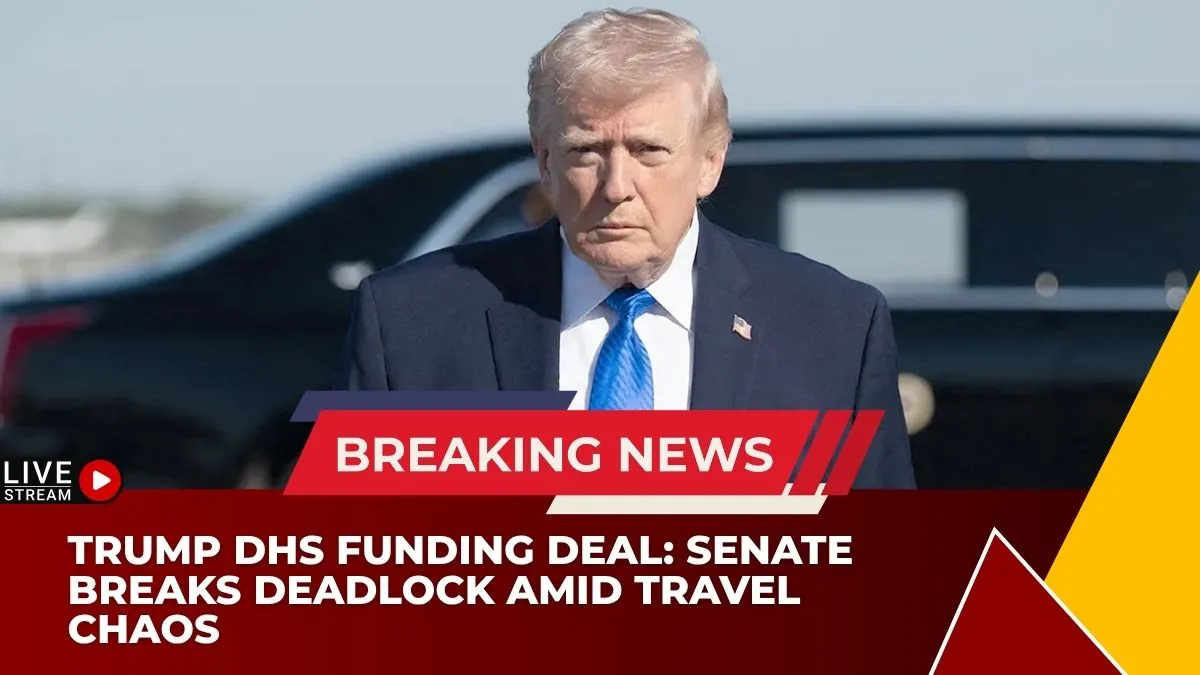
The Trump DHS funding deal has taken a significant step forward as the Senate approved a measure to fund most of the Department of Homeland Security (DHS).
This development marks progress in resolving the ongoing funding stalemate that has impacted critical security operations.
The agreement ensures funding for key agencies, including the Transportation Security Administration (TSA). However, it notably excludes financial support for Immigration and Customs Enforcement (ICE) and certain border patrol operations. The House of Representatives must still pass the measure before it becomes law.
Meanwhile, Donald Trump announced plans to sign an executive order instructing DHS to immediately compensate TSA workers, many of whom have been working without pay since the funding lapse began in February.
Airport Delays Intensify During Spring Travel Season
The Trump DHS funding deal comes at a critical time, as U.S. airports experience severe disruptions. With spring break travel in full swing, passengers are encountering long security lines and extended wait times.
The situation has worsened due to increased absenteeism among TSA officers. Many employees have called out or reduced hours after missing paychecks during the DHS funding gap. As a result, airport security operations are under strain, creating frustration for travelers nationwide.
Travelers are being advised to arrive earlier than usual and prepare for delays, as staffing shortages continue to affect screening efficiency. The Trump DHS funding deal is expected to provide relief, but only after full legislative approval and implementation.
Partial Funding Leaves Key Agencies in Limbo
Although the Trump DHS funding deal represents progress, it does not fully resolve all funding concerns. ICE and segments of border patrol operations remain unfunded under the current Senate agreement.
This partial approach highlights ongoing political disagreements over immigration policies and enforcement priorities. Lawmakers continue to debate funding allocations, making the House vote a crucial next step.
The Trump DHS funding deal could still face challenges before becoming law, as differing political perspectives may delay or modify the proposal.
Public Reaction and Planned “No Kings” Protests
As the Trump DHS funding deal moves forward, public sentiment remains divided. Nationwide protests under the banner “No Kings” are scheduled for the weekend, with demonstrators expressing opposition to the administration’s policies.
These protests come amid declining approval ratings for President Trump. Recent polls indicate his overall approval remains in the high 30% range, reflecting mixed public opinion.
The timing of the Trump DHS funding deal alongside these protests underscores the broader political tensions surrounding government funding, immigration, and national security policies.
What Comes Next for the Trump DHS Funding Deal?
The future of the Trump DHS funding deal now depends on the House of Representatives. If approved, the measure will restore funding to most DHS operations and stabilize TSA staffing issues.
Until then, interim solutions—such as the president’s directive to pay TSA workers—aim to mitigate immediate disruptions. However, long-term stability hinges on full legislative approval.
The Trump DHS funding deal remains a key development in addressing both operational challenges and political divisions within the U.S. government.
The Trump DHS funding deal signals meaningful progress in ending the DHS funding impasse, particularly for TSA operations during a peak travel period.
While the Senate’s agreement provides hope for relief at airports and financial support for federal workers, unresolved funding gaps for ICE and border patrol highlight ongoing political disputes.
As the House prepares to act, the outcome of this deal will play a crucial role in shaping both national security operations and public confidence.