
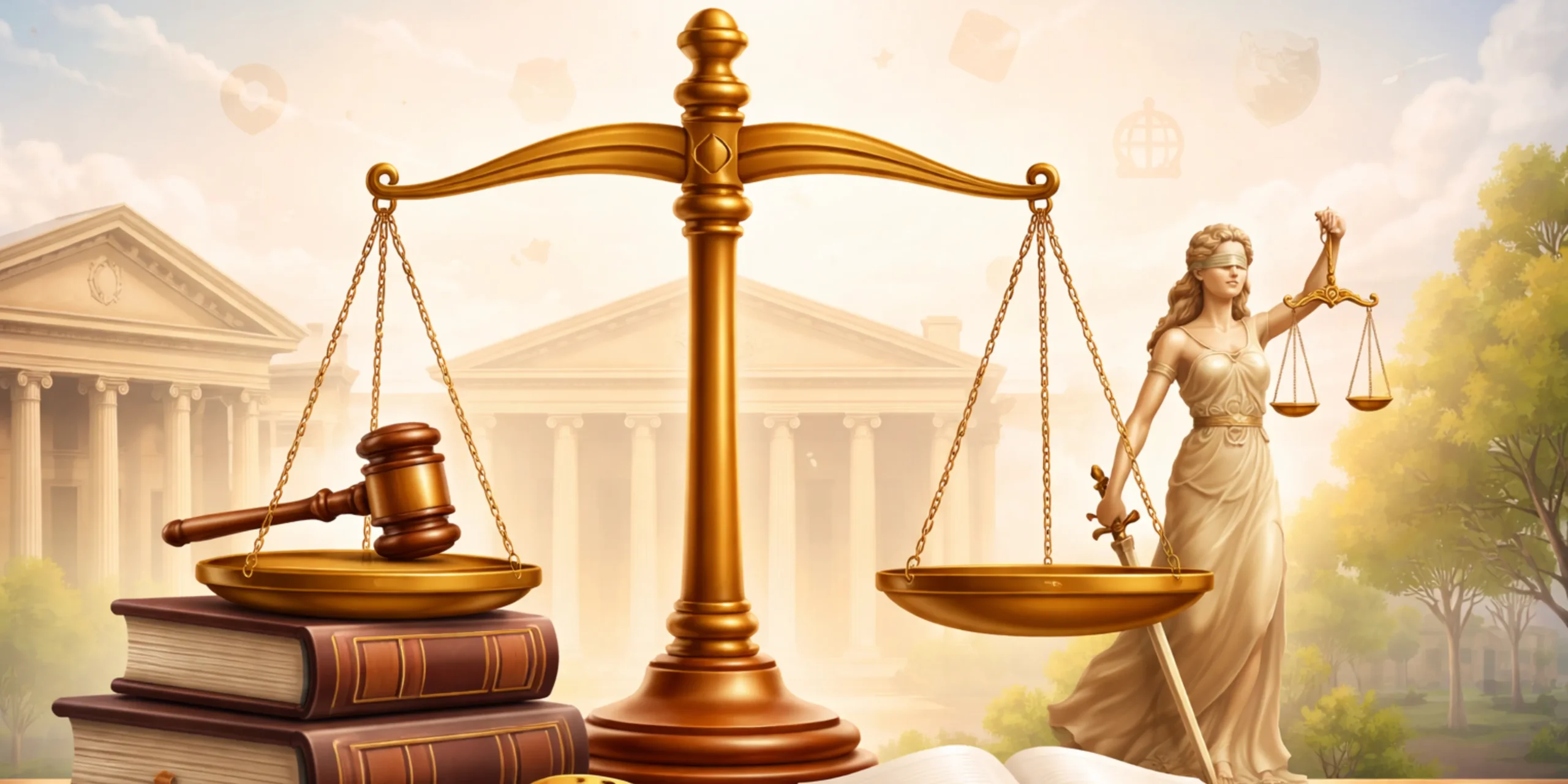
Law Justice: Modern societies rely on structured systems to maintain order and fairness. One of the most important concepts within governance and legal frameworks is the rule of law. While laws create rules that guide behaviour, justice ensures those rules are applied fairly and ethically.
Understanding the relationship between law and justice helps individuals see how courts, governments, and legal institutions work to protect rights and maintain social balance. In many situations, law and justice work together, but sometimes they can appear to conflict.
This guide explains how modern legal systems attempt to balance law and justice, why both are important, and how they influence everyday life.
What Is Law?
Law refers to a set of rules created and enforced by governments or authorities to regulate behaviour in society. These rules help maintain order, resolve disputes, and protect citizens.
Laws can exist in many forms, including:
Constitutional Law
This governs the structure of government and protects the fundamental rights of citizens.
Criminal Law
Criminal law defines actions considered crimes and outlines penalties for those offences.
Civil Law
Civil law deals with disputes between individuals or organizations, such as contracts, property conflicts, and compensation claims.
In modern societies, the goal of legal frameworks is to maintain stability while supporting law justice that protect fairness and equality.
What Is Justice?
Justice represents fairness, moral correctness, and equal treatment under legal systems. While law provides written rules, justice focuses on ensuring those rules lead to fair outcomes.
Justice often includes principles such as:
- Fair treatment for all individuals
- Protection of fundamental rights
- Accountability for wrongdoing
- Equal opportunity within legal systems
Without justice, laws might be applied rigidly without considering fairness. That is why legal institutions aim to align law enforcement with law justice values.
The Relationship Between Law and Justice
Although closely connected, law and justice are not identical concepts.
Law provides structure, while justice evaluates whether the results are fair. Courts, judges, and legal systems attempt to interpret laws in ways that support law justice.
For example:
- Laws define punishments for crimes.
- Courts evaluate evidence and apply those laws fairly.
- Judges interpret laws to deliver outcomes that reflect justice.
In this way, law justice becomes a guiding principle for balanced decision-making within legal systems.
Why Law and Justice Sometimes Conflict?
Despite their shared goals, there are situations where laws do not always produce just outcomes.
Several factors may cause this:
Outdated Laws
Some laws remain in place even after social values change, creating tension between legality and fairness.
Strict Interpretation
Applying laws without flexibility can sometimes produce results that appear unjust.
Human Bias
Legal decisions involve human interpretation, which may introduce bias or error.
When these situations occur, courts and policymakers often review legal frameworks to restore law justice balance within society.
How Modern Legal Systems Promote Justice
To maintain fairness, modern legal systems include safeguards that support justice alongside legal rules.
Independent Courts
Judicial independence allows judges to make decisions without political influence.
Due Process
Due process ensures that individuals receive fair legal procedures, including hearings and representation.
Human Rights Protections
Legal systems include protections that safeguard freedoms and dignity.
These elements help maintain trust in institutions and reinforce the principles of law justice within democratic societies.
Importance of Law and Justice in Society
The presence of fair laws and justice systems benefits society in many ways.
Maintaining Social Order
Clear laws help prevent chaos and guide acceptable behaviour.
Protecting Rights
Legal frameworks safeguard citizens from abuse or discrimination.
Resolving Conflicts
Courts provide structured processes to settle disputes peacefully.
Promoting Equality
Justice ensures laws apply equally regardless of status, wealth, or background.
When these functions operate effectively, societies experience stronger trust in institutions and better social harmony through law justice principles.
Challenges Facing Modern Legal Systems
Even advanced legal systems face ongoing challenges.
Access to Justice
Legal services may be expensive or difficult to obtain for many people.
Legal Complexity
Modern laws are often complicated, making them hard for ordinary citizens to understand.
Delayed Justice
Court backlogs can delay decisions, affecting fairness and public trust.
Addressing these issues is essential for maintaining effective law justice systems that serve all members of society.
Understanding the relationship between law and justice helps people appreciate how legal systems operate. Laws create structure and authority, while justice ensures fairness and ethical outcomes.
Together, they shape the way societies maintain order, resolve disputes, and protect individual rights.
Modern legal systems continuously evolve to maintain balance between rules and fairness. By strengthening institutions, protecting rights, and improving access to courts, societies can continue advancing the ideals of law justice for future generations.
FAQs
What is the difference between law and justice?
Law refers to written rules enforced by authorities, while justice focuses on fairness and equal treatment when applying those rules.
Why is justice important in legal systems?
Justice ensures that laws are applied fairly and protect individual rights, preventing misuse of legal authority.
Can laws exist without justice?
Yes, laws can exist without justice if they are unfair or applied unequally. Legal reforms aim to improve the balance between law and justic