
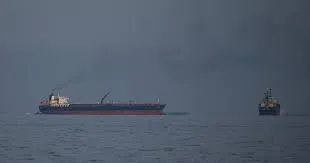
The United States has temporarily relaxed certain Russian oil sanctions in an effort to calm global energy markets shaken by supply disruptions linked to the Iran conflict.
Despite the policy adjustment, oil prices remain elevated as geopolitical tensions continue to threaten supply routes and global energy stability.
The short-term easing of Russian oil sanctions highlights the delicate balance between maintaining pressure on Moscow and preventing a major shock to the global economy.
Temporary Sanctions Relief Announced by the U.S.
The administration of Donald Trump announced a limited 30-day suspension on penalties affecting shipments of Russian oil already loaded onto tankers.
The decision was confirmed by U.S. Treasury Secretary Scott Bessent, who explained that the temporary measure allows buyers to receive these cargoes without risking violations of Russian oil sanctions rules.
According to Bessent, the move is a narrowly targeted policy meant to stabilize global energy markets. The exemption applies only to oil shipments that had already been placed on vessels by Thursday, ensuring that it does not create new opportunities for large-scale Russian exports.
The administration also previously provided a similar 30-day waiver for oil refineries in India. Together, these actions aim to prevent sudden shortages while keeping broader Russian oil sanctions intact.
Energy Market Concerns and Rising Oil Prices
Even after the announcement, oil prices remained high. The global benchmark Brent crude briefly dipped but quickly climbed above $100 per barrel, reaching approximately $103.24 during Friday trading. Just weeks earlier, Brent had been priced near $72.
One of the biggest reasons for the price surge is the disruption of tanker traffic through the Strait of Hormuz, a strategic waterway through which roughly 20% of the world’s oil normally flows. Fighting linked to the Iran war has severely limited shipping through this route, creating a significant supply shock.
Energy analysts believe the temporary easing of Russian oil sanctions could modestly increase available supply and help reduce pressure on prices. However, the impact is expected to be limited because the measure is short-term and applies only to oil already in transit.
Russia’s Oil Revenue and Global Trade Shifts
Since the 2022 invasion of Ukraine ordered by Vladimir Putin, Western governments imposed extensive Russian oil sanctions to weaken Moscow’s financial resources. The European Union, once Russia’s largest oil customer, halted most purchases, forcing the Kremlin to redirect exports toward Asian markets.
Countries such as China and India became major buyers of discounted Russian crude. The discounts were partly caused by Western price caps designed to limit Russia’s revenue while allowing oil to continue flowing to global markets.
Over time, Russia developed ways to bypass some restrictions. A network of aging tankers with complex ownership structures—often referred to as a “shadow fleet”—helped transport oil outside the Western insurance and shipping systems used to enforce Russian oil sanctions.
Ukraine’s Criticism of the Policy Shift
The easing of Russian oil sanctions drew strong criticism from Volodymyr Zelenskyy. Ukraine’s president argued that allowing more Russian oil sales could provide Moscow with billions of dollars to finance its war effort.
Zelenskyy estimated that the measure could generate around $10 billion for Russia. According to him, energy revenues are a critical funding source for the Kremlin’s military operations.
While Washington insists the exemption will not significantly boost Russia’s finances—because the oil had already been taxed at extraction—Kyiv remains skeptical about the broader geopolitical consequences.
How Sanctions Continue to Affect Russia’s Economy?
Although the latest policy adjustment offers limited relief, most Russian oil sanctions remain firmly in place. The United States has sanctioned major Russian energy companies such as Lukoil and Rosneft, significantly restricting their global operations.
Sanctions and price caps previously pushed Russia’s Urals crude below $40 per barrel in late 2025, dramatically reducing oil revenue. At that time, the price was roughly $25 lower than Brent crude.
However, with global oil prices rising again, Russia’s benchmark crude now trades above $80 per barrel. Higher prices have helped offset some of the losses caused by Russian oil sanctions, especially as Asian refineries continue to seek alternative supplies amid Middle Eastern disruptions.
Economic Impact and Global Supply Outlook
Energy experts estimate that about 125 million barrels of Russian oil are currently being transported by sea. That volume represents approximately five to six days of normal shipments through the Strait of Hormuz or slightly more than one day of global oil consumption.
Analysts believe the temporary adjustment to Russian oil sanctions could slightly narrow the price gap between Russian crude and Brent oil by lowering the risk for buyers. However, they emphasize that the broader structure of global energy trade is unlikely to change.
Some economists argue the policy move is also influenced by domestic concerns in the United States, where rising gasoline prices are creating political pressure on the government to address energy costs.
International Reaction
The policy has also triggered debate among Western allies. Germany’s chancellor, Friedrich Merz, said leaders of the Group of Seven discussed the issue with Washington. According to Merz, most G7 members believe easing Russian oil sanctions sends the wrong message while the conflict in Ukraine continues.
Despite these disagreements, many governments recognize the challenge of balancing economic stability with geopolitical pressure on Russia.
The temporary relaxation of Russian oil sanctions reflects the difficult choices facing global policymakers during times of geopolitical crisis. While the measure aims to stabilize energy markets and prevent severe price spikes, it has sparked debate over whether it undermines efforts to weaken Russia’s war economy.
With oil prices still high and disruptions in key shipping routes continuing, the global energy market remains vulnerable to further shocks.
The coming months will determine whether the adjustment to Russian oil sanctions successfully balances market stability with long-term strategic goals.