
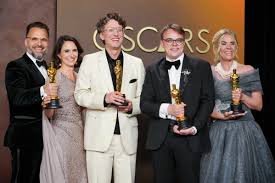
The Putin Documentary Mr Nobody Against Putin tells the extraordinary journey of Russian teacher and videographer Pavel Talankin, who transformed from an ordinary school employee into an internationally recognized filmmaker.
His courageous story highlights how one individual quietly challenged the system surrounding Vladimir Putin and eventually stood on the global stage as an award-winning documentary creator.
Within less than two years, Talankin’s life changed dramatically. Once living in the polluted industrial town of Karabash in Russia’s Ural Mountains, he eventually fled the country and watched his work receive global acclaim at the Academy Awards. His Putin Documentary reveals the hidden realities of war propaganda, education, and resistance inside modern Russia.
A School Videographer Turned Filmmaker
Before the war in Ukraine intensified, Talankin worked as an events coordinator and videographer at a local primary school in Karabash. His job involved filming student performances, school celebrations, and graduation ceremonies.
However, when Russia launched its full-scale invasion of Ukraine in 2022, the school system changed dramatically. Government directives began promoting patriotism, militarization, and loyalty to the state. Teachers were required to organize flag-raising ceremonies and patriotic activities.
Talankin was ordered to record these events and send evidence to authorities, essentially monitoring teachers to ensure they followed official narratives. At that moment, he realized the scale of the propaganda machine.
This realization became the foundation for the Putin Documentary that would later capture the world’s attention.
Secret Filming and a Dangerous Decision
Rather than simply documenting events for officials, Talankin secretly started collecting footage that exposed the indoctrination happening inside schools. He collaborated with Copenhagen-based American director David Borenstein and began transferring the material through encrypted channels.
The footage revealed disturbing scenes. Members of the Wagner Group visited the school and demonstrated weapons to children. Students were taught about mines and military equipment. Teachers delivered lessons explaining the so-called “denazification” of Ukraine.
Talankin described the moment he decided to share the footage as driven by anger and frustration. His goal was simple: ensure the truth existed somewhere in the world.
The hidden recordings eventually formed the backbone of the powerful Putin Documentary, exposing how war narratives were reaching Russian classrooms.
Humour as a Form of Resistance
Despite the film’s heavy subject, humour plays a surprising role in the documentary. Talankin often used satire and pranks to cope with the pressure of living under an authoritarian system.
At one point, he altered pro-war “Z” symbols displayed in the school windows into “X” shapes, showing quiet support for Ukrainian refugees. In another act of protest, he removed the Russian flag and blasted music by Lady Gaga while playing the U.S. national anthem.
According to Borenstein, humour has historically been a survival mechanism for people living under strict regimes. The Putin Documentary captures this mixture of courage and irony, illustrating how ordinary individuals resist power in small but meaningful ways.
Recognition on the International Stage
Talankin’s work first gained attention when the film premiered at the Sundance Film Festival. It quickly resonated with audiences who had never seen such an intimate perspective of Russia’s internal propaganda system.
Soon afterwards, the film won Best Documentary at the BAFTA Film Awards. By the time awards season reached Hollywood, Talankin was suddenly surrounded by global celebrities.
During the nominees’ luncheon, he even took selfies with actors such as Leonardo DiCaprio and Ethan Hawke. For someone who had never travelled outside Russia before 2024, the experience was surreal.
Ultimately, the film’s success culminated in an Oscar victory, turning the once-unknown teacher into an internationally celebrated filmmaker.
Forced Exile and Personal Sacrifice
While the documentary gained recognition, Talankin’s situation in Russia became increasingly dangerous. Authorities were known to imprison teachers and activists for minor acts of protest.
When he noticed police activity outside his apartment, concerns about his safety escalated. Soon afterwards, he made the difficult decision to leave Russia.
Before crossing the border, he was instructed to delete secure messaging apps and carefully conceal the footage he carried with him. The journey into exile meant leaving behind his homeland and even his mother, who appears in the documentary as the school librarian.
Today, Talankin lives in an undisclosed European location. Despite the uncertainty, he believes he will eventually return home when political circumstances change.
A Story Still Unfolding
Although the film brought international recognition, Talankin’s motivation remains deeply personal. He wants the Putin Documentary to reach as many people as possible, particularly Russians who may feel isolated in their opposition to propaganda.
He revealed that nearly 200,000 teachers have reportedly left their jobs rather than participate in the system shaping young minds with war narratives.
During an interview in Los Angeles on his 35th birthday, Talankin shared heartbreaking news: one of his former students, 19-year-old Nikita, had been killed in Ukraine. According to him, the young man might never have joined the war without the influence of propaganda.
Moments like these reinforce the powerful message behind the Putin Documentary—that information, truth, and storytelling can challenge powerful narratives.
Talankin’s journey from a small Russian town to the global stage highlights the impact one person can have when they choose to document the truth. His courageous decision to expose propaganda transformed ordinary footage into an award-winning film and brought international attention to the realities inside Russian schools.
More importantly, the story behind Mr Nobody Against Putin demonstrates how journalism, filmmaking, and individual bravery can illuminate hidden realities. As the Putin Documentary continues reaching audiences worldwide, it serves as both a warning and a testament to the power of storytelling in times of conflict.