
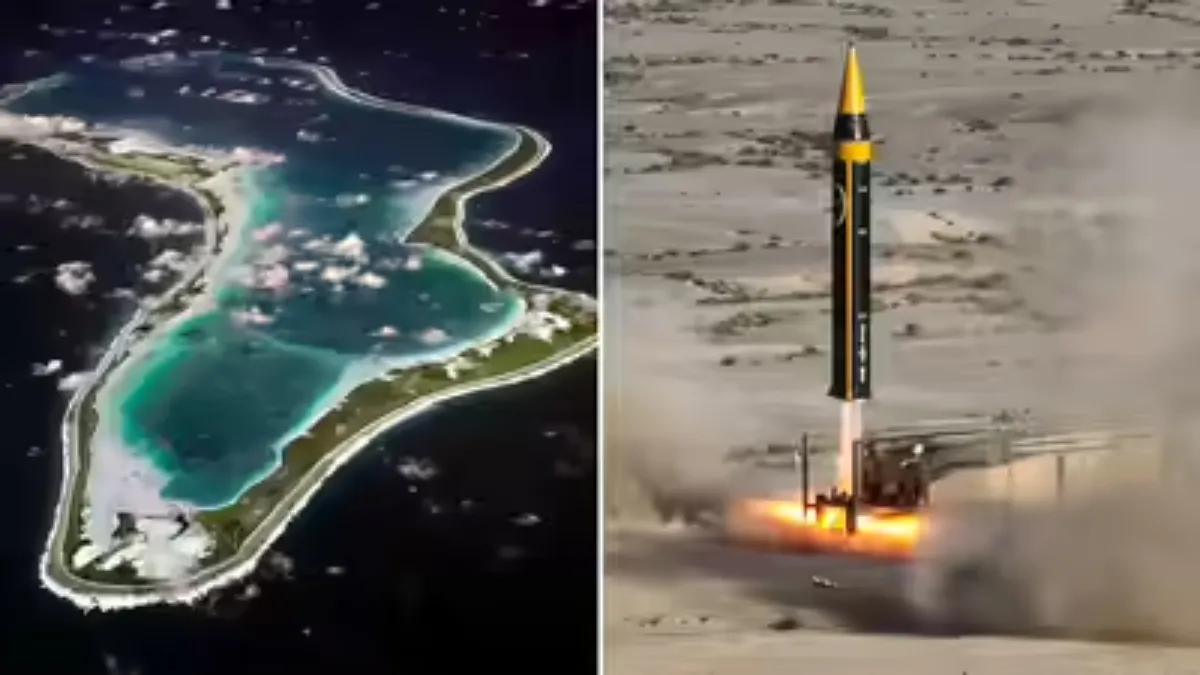
The Iran missile strike has drawn global attention after reports confirmed that Iran launched intermediate-range ballistic missiles toward Diego Garcia, a strategic U.S.-U.K. military base in the Indian Ocean.
This Iran missile strike represents a major escalation, showcasing Iran’s ability to project power far beyond the Middle East while directly challenging Western military interests.
Details of the Missile Launch
According to multiple U.S. officials, Iran fired two intermediate-range ballistic missiles (IRBMs) aimed at Diego Garcia, the largest island in the Chagos Archipelago. This Iran missile strike marks the first known operational use of such long-range missile systems by Iran.
Despite the seriousness of the situation, neither missile successfully hit the base. One missile reportedly failed during its flight, while the second triggered a defensive response from U.S. forces. The Iran missile strike highlights both the technological reach and the limitations of Iran’s missile capabilities.
U.S. Defensive Response
During the Iran missile strike, a U.S. warship stationed in the region responded by launching an SM-3 interceptor missile to counter the incoming threat. However, officials have stated that it remains unclear whether the interceptor successfully destroyed the missile mid-air.
This defensive action underscores the preparedness of U.S. military forces to respond to high-risk situations. The Iran missile strike also demonstrates the importance of missile defense systems in protecting key military installations from long-range threats.
Strategic Importance of Diego Garcia
Diego Garcia plays a crucial role in global military operations due to its location in the Indian Ocean. It serves as a joint U.S.-U.K. base used for logistics, surveillance, and strategic deployments. The Iran missile strike targeting this base signals a shift in Iran’s military strategy, extending its reach far beyond its regional sphere.
By attempting to strike Diego Garcia, Iran has effectively demonstrated its intent to threaten distant military assets. This Iran missile strike raises concerns about the vulnerability of overseas bases and the potential for broader geopolitical tensions.
Implications of the Strike
The Iran missile strike is significant not only because of its target but also because of the message it sends. It indicates that Iran is willing to escalate tensions and test advanced missile capabilities on a global stage.
Military analysts believe that this move could lead to increased defense readiness among Western allies. The Iran missile strike may also prompt further investments in missile defense technologies and strengthen military alliances in response to emerging threats.
Additionally, the incident highlights the evolving nature of modern warfare, where long-range precision strikes play a critical role. The Iran missile strike could set a precedent for future military engagements involving advanced missile systems.
The Iran missile strike targeting Diego Garcia marks a pivotal moment in global security dynamics.
While the attack did not result in direct damage, it showcased Iran’s growing missile capabilities and willingness to challenge powerful military forces beyond its immediate region.
This event emphasizes the need for robust defense systems and heightened vigilance in an increasingly complex geopolitical landscape.