
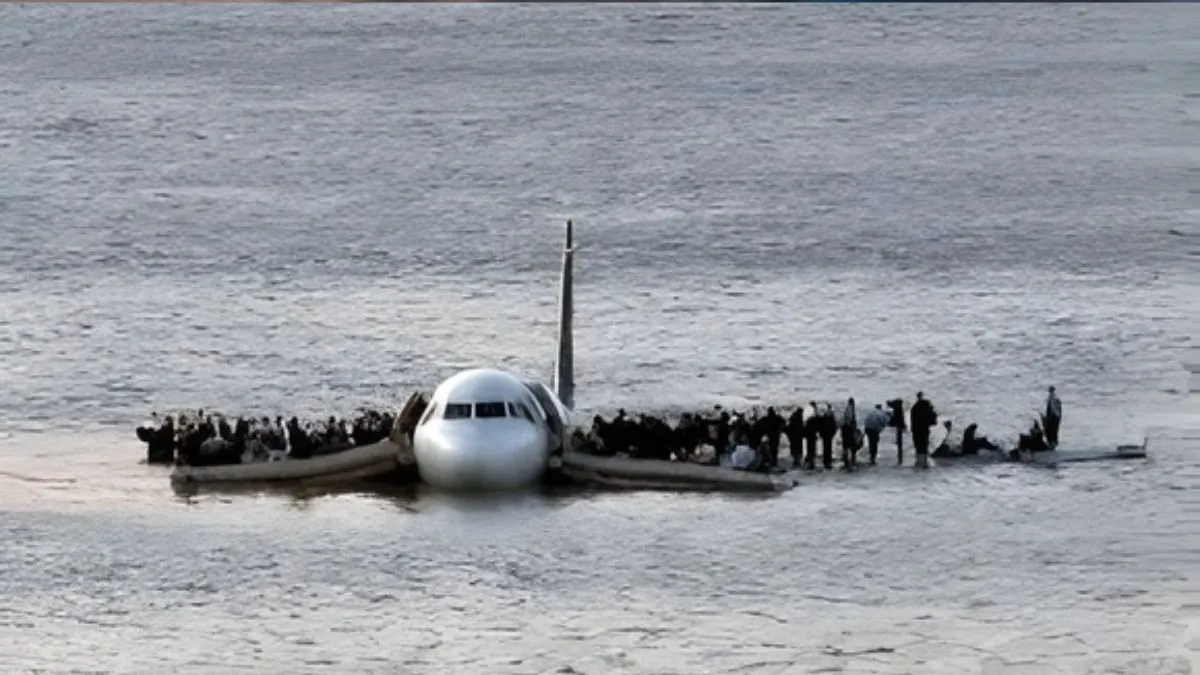
The Plane Crash NYC incident has emerged as a remarkable survival story, where a flight instructor and his teenage student defied extreme odds after an emergency landing in the Hudson River.
What could have ended in tragedy turned into a powerful example of skill, quick thinking, and resilience under pressure.
What Happened During the Plane Crash NYC Incident?
On March 2, 2026, a single-engine Cessna 172 encountered a critical failure mid-flight during a routine training session. The aircraft, operated by 31-year-old instructor Liam D’Arcy and his 17-year-old student, took off from Long Island MacArthur Airport around 6:30 p.m.
After completing a brief stop-and-go maneuver at Stewart International Airport, the situation quickly escalated. The pilot reported a complete loss of oil pressure—an emergency that left the aircraft without reliable engine power.
With no runway nearby and limited time to react, the Plane Crash NYC scenario became a test of survival instincts.
Critical Decision Over the Hudson River
Facing a life-threatening situation, D’Arcy made a split-second choice to guide the aircraft toward the Hudson River near the Newburgh-Beacon Bridge in Orange County.
Air traffic control recordings captured his calm but urgent message: “We’re going into the Hudson River.”
At approximately 8:02 p.m., the aircraft descended and made a hard landing on the icy river surface. Despite the dangerous conditions, the decision proved lifesaving.
Surviving the Freezing Waters
The impact was only the beginning. The Hudson River’s freezing temperatures posed an immediate threat to survival.
After the crash, both occupants managed to exit the sinking aircraft without assistance. They then swam nearly 50 feet through icy water to reach the shoreline.
Key Incident Details
- Aircraft: Cessna 172
- Cause: Total loss of oil pressure
- Landing Time: 8:02 p.m.
- Location: Hudson River near Newburgh-Beacon Bridge
- Swim Distance: Approx. 50 feet
- Condition: Treated for hypothermia, later discharged
Their ability to remain calm and act quickly played a crucial role in overcoming the harsh conditions.
Witness Support From the Sky
In an extraordinary twist, another pilot flying a sightseeing tour nearby heard the distress call. Despite the darkness, he identified the aircraft’s lights and relayed its location to authorities.
This aerial assistance helped emergency responders locate the crash site faster, adding another layer of coordination to the Plane Crash NYC rescue story.
Expert Skill or Pure Luck?
Authorities, including New York officials, described the event as a modern-day miracle. Comparisons were made to historic aviation incidents involving water landings.
However, aviation experts suggest that while luck played a role, the successful outcome was largely due to the instructor’s training, decision-making, and composure during a critical moment.
The Plane Crash NYC event highlights how preparation and presence of mind can significantly influence survival outcomes in aviation emergencies.
Ongoing Investigation
The Federal Aviation Administration continues to investigate the exact cause of the engine failure. Meanwhile, the partially submerged aircraft remains a visible reminder of how quickly routine flights can turn into emergencies.
The Plane Crash NYC incident stands as a powerful example of human resilience and aviation expertise.
From a catastrophic engine failure to a perfectly executed emergency landing and survival in freezing waters, every moment reflects courage and quick thinking.
While luck may have played a role, it was ultimately skill and determination that ensured both individuals survived with minor injuries.