
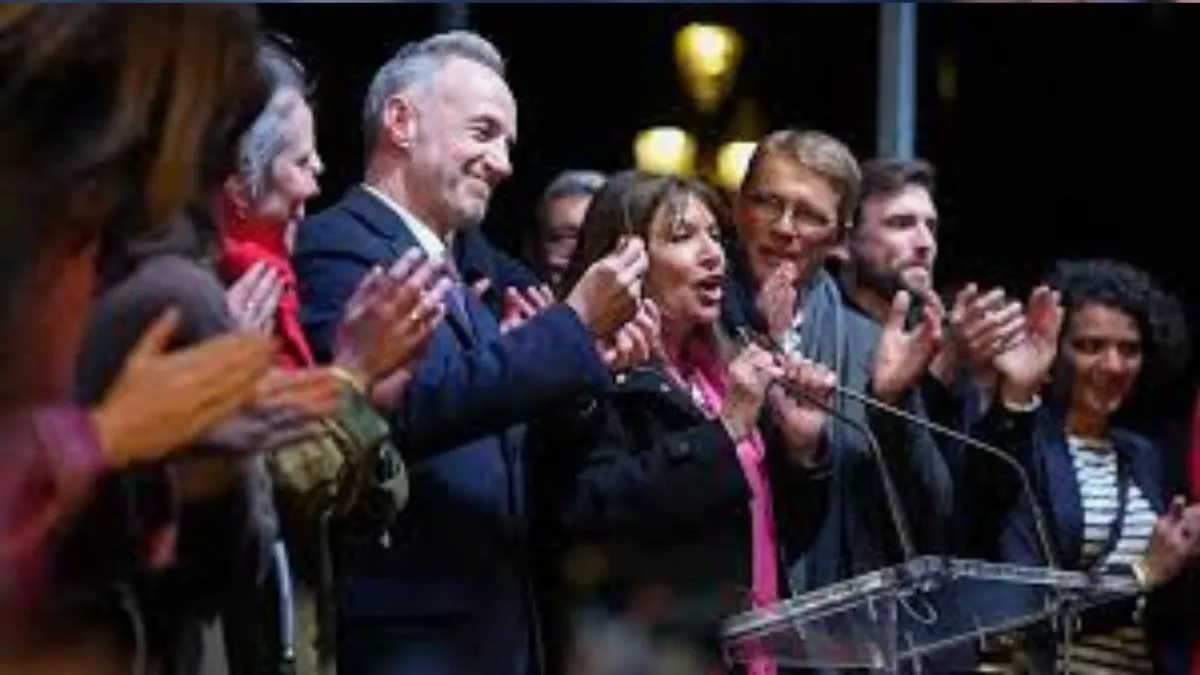
The France Local Elections 2026 have delivered a significant boost to mainstream political parties, as Socialist candidates and their allies successfully retained control over key urban centers.
The France Local Elections 2026 highlight how established parties continue to dominate major cities, even as far-left and far-right groups attempt to expand their influence.
Socialists Maintain Stronghold in Major Cities
In the France Local Elections 2026, the Socialist Party and its partners held onto leadership in France’s four largest cities—Paris, Marseille, Lyon, and Lille.
A major highlight was Emmanuel Grégoire’s victory as the new mayor of Paris, following the decision of outgoing mayor Anne Hidalgo not to seek another term.
These results reaffirm the capital’s reputation as a left-leaning city. Policies such as reduced car usage, introduced under previous leadership, appear to have resonated with voters.
The France Local Elections 2026 demonstrated that urban populations still favor structured, mainstream governance.
Far-Left and Far-Right Make Select Gains
While mainstream parties dominated, the France Local Elections 2026 also saw notable gains from both ends of the political spectrum. In Nice, a candidate aligned with Marine Le Pen secured victory, while in Roubaix, the far-left France Unbowed (LFI) party achieved success.
Additionally, LFI celebrated earlier gains in areas like Saint-Denis. However, despite these wins, their overall impact remained limited compared to mainstream parties. The France Local Elections 2026 suggest that while fringe movements are growing, they are not yet replacing traditional political forces.
Failure of Left and Far-Left Alliances
One of the defining takeaways from the France Local Elections 2026 was the underperformance of alliances between mainstream left parties and the far-left LFI. In cities like Toulouse, Strasbourg, Poitiers, Limoges, and Tulle, such collaborations failed to deliver expected victories.
In contrast, Socialist leaders who avoided partnerships with LFI—due to controversies including accusations of sectarian behavior and insensitive remarks—managed to secure stronger results. The France Local Elections 2026 revealed that voters may be skeptical of political alliances perceived as opportunistic or controversial.
Lyon: An Exception to the Trend
Lyon stood out during the France Local Elections 2026, where Ecologist mayor Grégory Doucet successfully retained his position despite collaborating with LFI. Analysts attribute this outcome more to the weak campaign of his conservative opponent than to the alliance itself.
This exception underscores that local dynamics and candidate quality still play a critical role in election outcomes, even within broader national trends seen in the France Local Elections 2026.
Right-Wing and Centrist Developments
The France Local Elections 2026 also brought mixed results for right-wing and centrist groups. In Paris, conservative candidate Rachida Dati faced challenges due to internal divisions and legal controversies, which likely impacted voter confidence.
Meanwhile, President Emmanuel Macron’s centrist party achieved a morale boost with a key victory in Bordeaux. Additionally, former Prime Minister Édouard Philippe secured a win in Le Havre, strengthening his potential candidacy for the 2027 presidential elections.
These outcomes from the France Local Elections 2026 indicate that centrist forces remain competitive, especially when supported by broad coalitions.
Far-Right Performance Across Regions
The far-right National Rally (RN) demonstrated resilience in smaller towns and provincial areas during the France Local Elections 2026. Victories in places such as Montargis, Carcassonne, and La Seyne-sur-Mer highlight its growing appeal outside major cities.
However, the party failed to capture key urban targets like Marseille and Toulon, where opposition parties united to block its path. The France Local Elections 2026 clearly show a divide between urban and rural political preferences in France.
Urban vs Peripheral Voting Patterns
A significant insight from the France Local Elections 2026 is the geographic divide in voter behavior. The far-left has been gaining traction in suburban and peripheral urban areas, often among working-class and intellectual communities.
At the same time, the far-right continues to expand its influence in rural regions. Despite these trends, mainstream parties remain dominant in large metropolitan areas, as seen throughout the France Local Elections 2026.
The France Local Elections 2026 confirm that mainstream political parties still hold a decisive advantage in France’s major cities. Although both far-left and far-right movements are gaining ground in specific regions, they have yet to challenge the dominance of traditional parties on a national scale.
Looking ahead, these results provide optimism for centrist and moderate candidates in the upcoming presidential elections. However, a key concern remains: if future run-offs feature only extreme candidates, the political landscape could shift dramatically.
The 2026 local elections in France highlight both stability and underlying political tensions.