
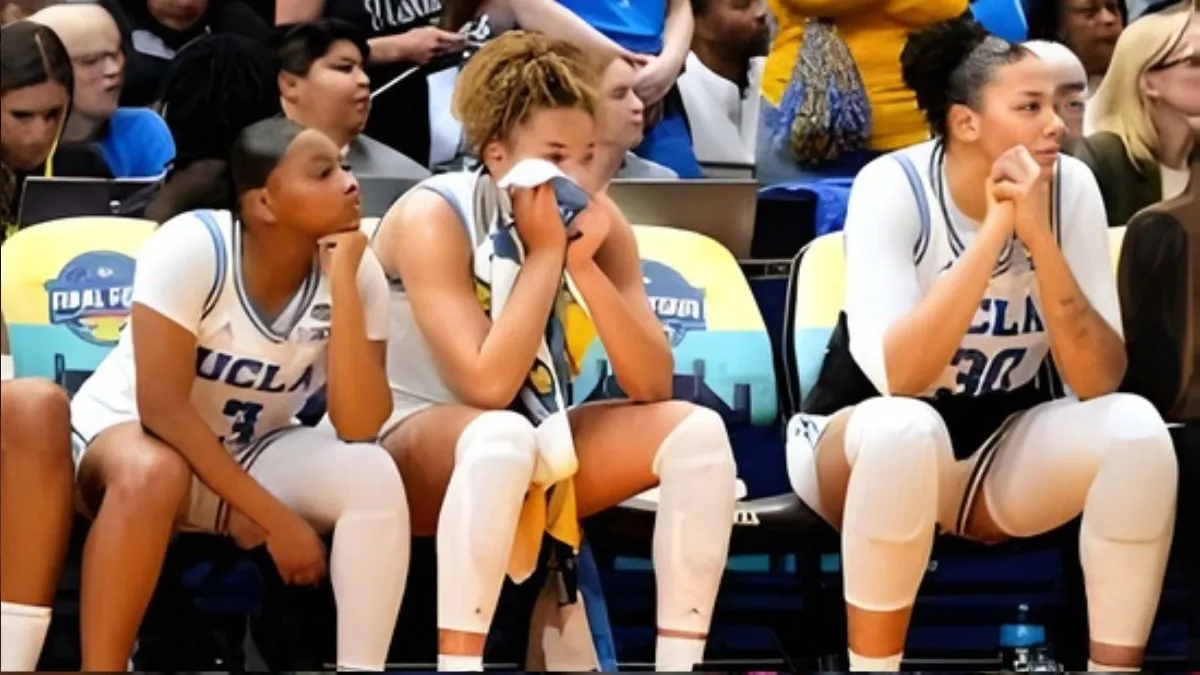
The UCLA loss UConn story once again highlights how momentum shifts can define a season in the NCAA Tournament.
What began as a tightly contested matchup quickly turned one-sided in the second half, ultimately ending UCLA’s campaign with a disappointing defeat.
First Half: A Competitive Start
In the opening half, both teams displayed strong defensive discipline and balanced scoring.
UCLA managed to stay within striking distance, matching UConn’s intensity on both ends of the court. The game remained close, with neither side able to build a significant lead.
The Bruins showed promise early, executing their plays effectively and maintaining composure under pressure. At halftime, it appeared that the contest could go either way, setting the stage for a dramatic finish in this UCLA loss UConn encounter.
Turning Point: UConn’s Dominant Run
The defining moment of the game came midway through the second half. UConn unleashed a powerful 14-0 scoring run that shifted the momentum entirely. During this stretch, UCLA struggled offensively, going more than five and a half minutes without scoring.
This scoring drought proved costly, as UConn extended its lead to 56-44 with just over 10 minutes remaining. The sudden surge exposed gaps in UCLA’s offensive rhythm and defensive adjustments, making the UCLA loss UConn outcome increasingly likely.
Brief UCLA Comeback Attempt
Despite the setback, UCLA showed resilience. The Bruins responded with an 8-0 run, cutting the deficit to 56-52. This brief comeback injected hope into their performance and suggested a possible turnaround.
Eric Dailey and his teammates stepped up during this stretch, demonstrating determination and urgency. However, sustaining that momentum proved challenging. UConn quickly regained control, shutting down UCLA’s scoring opportunities and rebuilding their lead.
This sequence encapsulated the core narrative of the UCLA loss UConn, where moments of promise were overshadowed by prolonged struggles.
Second-Half Struggles Continue
Following their short-lived rally, UCLA once again faced offensive difficulties. Another scoring drought allowed UConn to widen the gap further, effectively sealing the game.
The Bruins’ inability to maintain consistency on offense became a critical factor. Missed shots, turnovers, and limited scoring options contributed to their downfall. Meanwhile, UConn capitalized on these weaknesses, executing efficiently and controlling the pace.
By the final minutes, the game had slipped out of reach, confirming the UCLA loss UConn result with a final score of 73-57.
Key Factors Behind the Defeat
Several elements played a crucial role in shaping the outcome:
- Extended scoring droughts: UCLA’s inability to score during key stretches allowed UConn to dominate.
- Momentum swings: UConn’s 14-0 run proved decisive in breaking the game open.
- Defensive lapses: UCLA struggled to contain UConn’s offensive rhythm in the second half.
- Missed opportunities: Even during comeback attempts, the Bruins couldn’t sustain their performance.
These factors collectively defined the UCLA loss UConn, illustrating how small lapses can have significant consequences in high-stakes games.
Impact on UCLA’s Season
This defeat marks another early exit for UCLA in the tournament, raising questions about consistency and execution under pressure. While the team showed flashes of potential, their inability to perform consistently in critical moments ultimately cost them.
The UCLA loss UConn also reflects the competitive nature of March Madness, where even brief lapses can determine the outcome. For UCLA, this game serves as both a disappointment and a learning opportunity moving forward.
The UCLA loss UConn game serves as a clear reminder of how quickly fortunes can change in basketball.
Despite a promising start and a brief second-half comeback, UCLA’s scoring struggles and UConn’s decisive runs ultimately dictated the result.
As the Bruins reflect on this loss, the focus will likely shift toward improving consistency and resilience in future tournaments.