
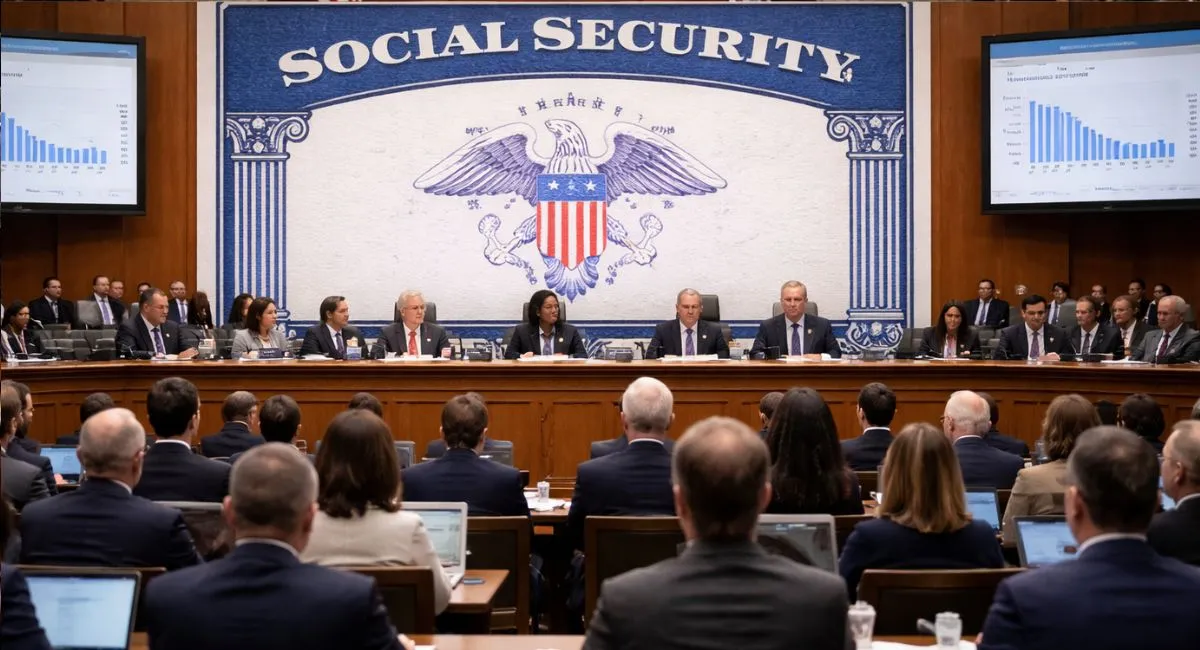
Social Security Reform has become one of the most urgent policy discussions in the United States.
During the March 25, 2026 Senate Budget Committee hearing, the Bipartisan Policy Center (BPC) emphasized the growing financial strain on the Social Security system and the need for immediate, bipartisan action.
For over 90 years, Social Security has supported retirees, individuals with disabilities, and their families. Today, it serves nearly 68 million Americans and remains a foundational pillar of retirement security.
However, without timely Social Security Reform, the system faces a serious risk of insolvency that could impact millions of beneficiaries.
Understanding the Current Social Security Crisis
Declining Trust Fund Stability
The Old-Age and Survivors Insurance (OASI) trust fund is rapidly depleting. According to projections from the Social Security Administration (SSA) and Congressional Budget Office (CBO):
- The fund is expected to be exhausted by 2032
- Benefits could be reduced by 20–25% if no action is taken
This makes Social Security Reform essential to prevent sudden income loss for retirees.
Massive Long-Term Funding Gap
The system faces a $26 trillion shortfall over 75 years, with a deficit of nearly $500 billion in 2033 alone. This gap highlights the need for a balanced Social Security Reform strategy combining both revenue increases and benefit adjustments.
Key Causes Behind the Financial Challenges
1. Shrinking Tax Base
- Payroll taxes covered 90% of earnings in 1983
- Dropped to 83% in 2023
- High-income earnings exceeding the taxable cap ($184,500 in 2026) reduce contributions
2. Demographic Shifts
- Worker-to-beneficiary ratio:
- 4:1 in 1965
- 2.7:1 in 2024
- Projected 2:1 by 2070s
Longer lifespans and lower birth rates are intensifying the burden, making Social Security Reform unavoidable.
3. Rising Benefit Costs
- Average benefits in 2025 are 70% higher (inflation-adjusted) than in 1977
- Maximum annual benefit exceeds $62,000 in 2026
This growth increases financial pressure on the system.
What Happens If Policymakers Delay Action?
Without timely Social Security Reform, drastic measures will be required:
- Immediate fixes today:
- 29% payroll tax increase OR
- 22.4% benefit reduction
- If delayed until depletion:
- 34% tax increase OR
- 25.8% benefit cut
Delays will disproportionately affect younger generations.
Opportunities for Modernizing Social Security
Improving Benefit Fairness
- Low-income retirees often receive less than $1,000/month
- Reform can strengthen support for vulnerable populations
Updating Spousal Benefits
Current policies reflect outdated workforce patterns. Modern Social Security Reform can better align benefits with today’s dual-income households.
Strengthening Survivor Benefits
Widows and widowers often lose up to half of household income, risking poverty. Reform can ensure financial stability after a spouse’s death.
Recommended Policy Solutions
The Bipartisan Policy Center suggests a balanced Social Security Reform package, including:
- Increasing payroll taxes modestly
- Raising the taxable earnings cap
- Introducing a minimum benefit for low-income retirees
- Adjusting retirement age based on life expectancy
- Enhancing survivor benefits
- Modifying cost-of-living adjustments (COLA)
- Expanding coverage to state and local workers
These measures aim to ensure long-term solvency while protecting vulnerable groups.
Investment-Based Reform Ideas
Some policymakers propose creating a sovereign-style investment fund to improve returns:
Potential Benefits
- Higher returns compared to Treasury securities
- Could generate additional funding
Key Risks
- Increased government debt
- Market volatility
- Political interference in investment decisions
Even under optimistic scenarios, such strategies alone cannot replace comprehensive Social Security Reform.
The Need for Bipartisan Action
Historically, bipartisan cooperation saved Social Security in 1983, when the system was near collapse. However, today’s financial challenges are significantly larger:
- U.S. debt-to-GDP ratio has risen from 32% (1983) to nearly 100% today
- Delay increases uncertainty and required adjustments
Public opinion strongly supports immediate, bipartisan Social Security Reform, even if compromises are necessary.
Social Security Reform is no longer optional—it is essential. The system’s financial challenges are well understood, and delaying action will only worsen the situation. A balanced approach that combines revenue increases, benefit adjustments, and structural modernization offers the most practical path forward.
By acting now, policymakers can protect current beneficiaries, ensure fairness for future generations, and restore confidence in one of America’s most critical programs. The time for decisive and bipartisan Social Security Reform is now.