
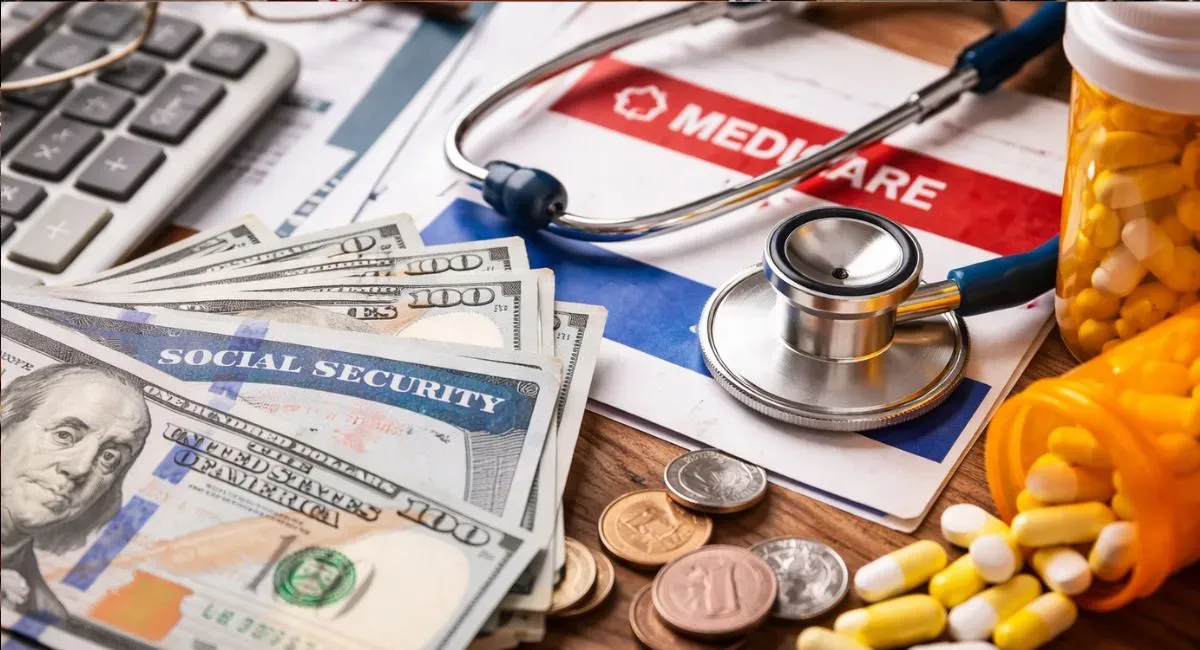
The projected Social Security COLA for 2027 is raising serious concerns among retirees.
Early estimates suggest that the Social Security COLA increase will remain modest, potentially failing to match the rising cost of living.
This situation could put additional financial pressure on millions of seniors who rely heavily on these benefits.
Expected Social Security COLA for 2027
According to early forecasts from The Senior Citizens League (TSCL), the Social Security COLA for 2027 is expected to be around 2.8%, the same increase seen in 2026.
Although an increase is better than none, experts warn that this Social Security COLA may not be enough to keep up with inflation and essential expenses.
Rising Medicare Costs Outpacing COLA
One major concern is that Medicare Part B premiums are increasing at a much faster rate than the Social Security COLA. For 2026, premiums rose by 9.7%, jumping from $185.00 to $202.90.
This marks a trend where healthcare costs consistently outpace the Social Security COLA, reducing the actual benefit seniors receive.
Potential Trust Fund Crisis by 2032
A report from the Congressional Budget Office (CBO) warns that the Social Security trust fund could run out by 2032. If no action is taken, beneficiaries may face an automatic 24% cut in their payments.
For example:
- A monthly benefit of $2,000 could drop by $480
- Resulting in a reduced payment of $1,520
This potential reduction, combined with a weak Social Security COLA, could severely impact retirees’ financial stability.
Financial Struggles Among Seniors
Research from TSCL highlights growing financial stress among retirees:
- 58% of seniors fear rising costs will force them to use savings early
- 73% would struggle to pay monthly bills if benefits are cut
- 68% may reduce spending on food
- 52% could delay or skip medical care
These findings indicate that even with the current Social Security COLA, many seniors are already struggling to make ends meet.
Healthcare Access Becoming a Major Issue
Another alarming trend is reduced access to essential healthcare:
- 57.6% of seniors skipped at least one healthcare service in the past year due to costs
Experts emphasize that services like dental, vision, and hearing care are often treated as optional, even though they are critical for long-term health.
Limited access to these services, combined with a weak Social Security COLA, can negatively affect both physical and cognitive well-being.
Possible Solutions to Strengthen Social Security
Several proposals are being discussed to address the funding crisis and improve the Social Security COLA:
- Removing the $184,500 income cap on Social Security taxes
- Broad public support (77% of seniors favor this change)
- Extending the program’s solvency potentially until 2090
These solutions could help stabilize benefits and ensure that the Social Security COLA better reflects real-world expenses.
The outlook for the Social Security COLA in 2027 suggests only a modest increase, which may not be sufficient to offset rising living and healthcare costs.
Combined with the looming trust fund depletion and potential benefit cuts, seniors could face increasing financial hardship.
Addressing these issues through policy changes is essential to ensure long-term stability and adequate support for retirees.
FAQs
What is the expected Social Security COLA for 2027?
The Social Security COLA is currently estimated at 2.8%, similar to the 2026 increase.
2. Why is the Social Security COLA considered insufficient?
Because expenses like healthcare and Medicare premiums are rising faster than the Social Security COLA, reducing real income.
What happens if the Social Security trust fund runs out?
If no reforms are made, benefits could be automatically reduced by 24%, significantly impacting retirees.