
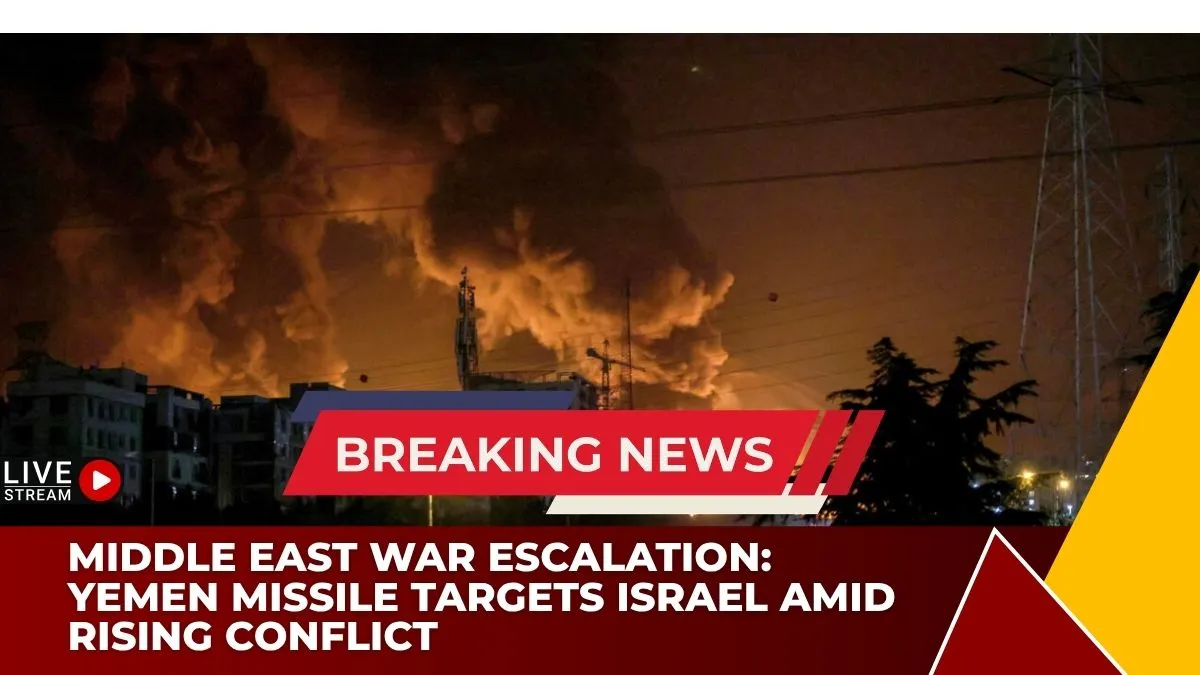
The Middle East War Escalation has taken a new turn as Israel reported its first incoming missile from Yemen, signaling a broader regional involvement in the ongoing conflict.
The development adds another layer of tension to an already volatile situation involving Iran, Hezbollah, and other regional actors.
First Missile From Yemen Raises Alarm
Israel’s military confirmed that a missile was launched from Yemen early Saturday, marking the first such attack from that country. Air raid sirens were activated in areas around Beersheba and near a key Israeli nuclear research facility, causing widespread concern among residents.
This incident highlights how the Middle East War Escalation is no longer limited to a few fronts but is rapidly expanding across multiple regions.
Role of the Houthis in the Conflict
The missile launch is suspected to be linked to the Houthis, a Tehran-backed rebel group controlling Yemen’s capital, Sanaa, since 2014. Although the Houthis have not officially claimed responsibility, their past actions suggest possible involvement.
Previously, the Houthis maintained a relatively cautious stance during the conflict, partly due to a fragile ceasefire with Saudi Arabia. However, the latest developments indicate that the Middle East War Escalation may be drawing them deeper into the conflict.
Simultaneous Attacks by Iran and Hezbollah
At the same time, Israel faced continued attacks from Iran and Hezbollah. Overnight strikes triggered multiple sirens across Israeli cities, further intensifying fears of a wider war.
In response, Israel launched airstrikes targeting Iran’s nuclear facilities after warning of an expanded military campaign. These actions underscore how the Middle East War Escalation is evolving into a direct confrontation between major regional powers.
Iran’s Retaliation and Regional Impact
Following Israeli strikes, Iran retaliated by targeting a military base in Saudi Arabia. The attack reportedly injured U.S. service members and caused damage to aircraft stationed at the base.
This retaliation demonstrates how the Middle East War Escalation is impacting not only Israel and Iran but also involving global powers and neighboring countries.
Humanitarian Consequences Across the Region
The ongoing conflict has led to severe humanitarian challenges. In cities like Tel Aviv, residents were seen evacuating damaged buildings after missile strikes. Meanwhile, in Beirut, families displaced by Israeli attacks in southern Lebanon have taken shelter in temporary camps.
In Tehran, rescue teams worked through rubble following overnight strikes, highlighting the devastating impact on civilians.
The growing Middle East War Escalation continues to displace families and strain already fragile infrastructures across the region.
Impact on Global Trade and Security
The conflict is also affecting international trade routes, particularly in the Red Sea. Earlier attacks on commercial vessels disrupted one of the world’s busiest shipping lanes, through which nearly $1 trillion worth of goods typically passes annually.
With Yemen potentially entering the conflict, the Middle East War Escalation could further threaten maritime security and global economic stability.
Diplomatic Efforts and Mediation Attempts
Amid rising tensions, countries like Pakistan have stepped forward, offering to mediate between Washington and Tehran. These diplomatic efforts aim to prevent further escalation and bring both sides to the negotiating table.
However, with ongoing military actions, the success of such initiatives remains uncertain as the Middle East War Escalation continues to intensify.
The latest missile launch from Yemen marks a significant turning point in the Middle East War Escalation, signaling a broader and more dangerous phase of the conflict.
With multiple countries now directly or indirectly involved, the risk of a full-scale regional war is increasing.
Alongside military developments, the humanitarian and economic consequences continue to grow, making urgent diplomatic intervention more critical than ever.