
Social Security Reform is becoming an urgent topic as concerns grow over the program’s long-term stability.
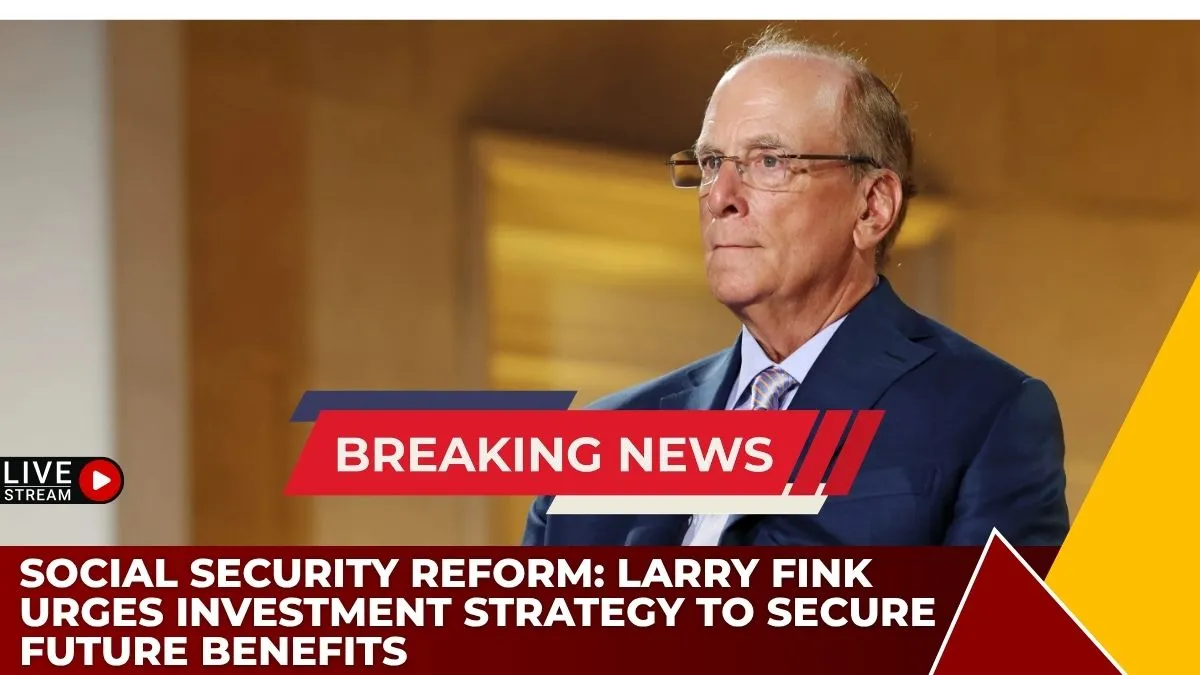
Larry Fink, CEO of BlackRock, has called for meaningful changes, suggesting that investing a portion of Social Security funds could help strengthen the system.
With projections indicating potential benefit cuts in the coming decade, the debate around Social Security Reform is gaining momentum.
Current Structure of Social Security
At present, the Social Security system operates largely on a pay-as-you-go model. This means that payroll taxes collected from current workers are used to fund benefits for retirees.
The system’s trust fund is primarily invested in U.S. Treasury bonds, ensuring stability but limiting growth potential.
Fink explains that while this structure provides predictability, it does not allow Americans to benefit from broader economic growth. As a result, Social Security Reform discussions now focus on balancing stability with growth opportunities.
Why Social Security Reform Is Being Proposed?
According to projections, the Social Security trust fund could become insolvent by 2032–2033. If this happens, federal law would require benefits to be reduced to match incoming payroll tax revenue.
A nonpartisan analysis estimates that retirees could face a 24% cut in benefits, highlighting the urgency of Social Security Reform. This looming shortfall has sparked conversations among policymakers, economists, and financial leaders.
Fink emphasizes that ignoring the issue could lead to severe consequences, making Social Security Reform essential for protecting future retirees.
Larry Fink’s Investment-Based Proposal
Fink suggests that a portion of Social Security funds could be invested in diversified assets, including stocks and bonds, over a long period. This approach would:
- Maintain the program’s core guarantees
- Introduce long-term growth potential
- Reduce reliance solely on payroll taxes
He clarifies that this idea does not mean privatizing Social Security, but rather adding diversification similar to retirement systems like the federal Thrift Savings Plan.
This proposed Social Security Reform aims to combine stability with economic growth, ensuring better outcomes for future beneficiaries.
Bipartisan Plan Supporting Social Security Reform
A bipartisan proposal by Senators Bill Cassidy and Tim Kaine aligns with Fink’s vision. The plan includes:
- Creating a new investment fund alongside the current trust fund
- Investing approximately $1.5 trillion initially
- Allowing the fund to grow over 75 years
- Continuing to pay benefits through Treasury support during the growth phase
Once matured, the fund would repay the Treasury and help bridge the gap between Social Security’s income and obligations. Importantly, this version of Social Security Reform ensures that current retirees and those nearing retirement would not experience benefit changes.
Global Examples of Investment-Based Systems
Fink also points to international models like Australia’s superannuation system, where retirement contributions are actively invested in financial markets. These systems have demonstrated how diversified investments can generate higher returns over time.
Additionally, around six million U.S. workers in state and local government roles already rely on pension systems that invest in diversified portfolios instead of traditional Social Security. These examples strengthen the case for Social Security Reform through investment strategies.
Challenges and Public Concerns
Despite the potential benefits, Social Security Reform often faces resistance. Many Americans are concerned about:
- Risk associated with stock market investments
- Changes to a long-standing safety net
- Trust in government-managed funds
Fink acknowledges these concerns, emphasizing that any reform must preserve the program’s core promise while improving its sustainability.
The Cost of Inaction
Fink warns that avoiding the conversation around Social Security Reform could be more damaging than taking action. With younger generations increasingly skeptical about receiving full benefits, the urgency to act is growing.
He stresses that solving the issue will likely require multiple strategies, including investment reforms, policy adjustments, and long-term planning.
The Future of Social Security Reform
Social Security Reform is no longer optional—it is a necessity. With the trust fund nearing depletion and potential benefit cuts looming, policymakers must explore innovative solutions.
Larry Fink’s proposal to incorporate long-term investment strategies offers a balanced approach that preserves stability while enabling growth.
If implemented carefully, Social Security Reform could secure benefits for future generations without compromising current retirees. The key lies in starting the conversation now, rather than waiting until the system reaches a breaking point.
FAQs
What is Social Security Reform?
Social Security Reform refers to changes aimed at improving the program’s financial stability and ensuring long-term benefit payments.
Why is Social Security Reform needed now?
Reform is necessary because the trust fund may become insolvent by 2032–2033, potentially leading to a 24% reduction in benefits.
Does Social Security Reform mean privatization?
No, proposed reforms like Larry Fink’s focus on partial investment diversification, not full privatization of the system.