
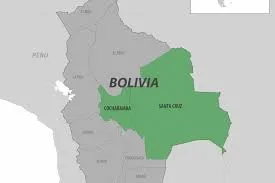
The Chikungunya Bolivia situation has become a growing public health concern as national health authorities report a significant number of infections across the country. According to Bolivia’s Ministry of Health, the total number of confirmed cases reached 5,371 by March 7, 2026.
The department of Santa Cruz accounts for the largest share, reporting 4,371 infections, making it the most affected region. Despite the high numbers, health officials say recent data shows a gradual decline in cases within Santa Cruz, offering some early signs of improvement.
However, other regions are beginning to experience rising cases of mosquito-borne illnesses. Departments such as Beni have declared a Health Emergency due to simultaneous outbreaks of dengue and chikungunya, prompting urgent public health interventions.
Santa Cruz Remains the Center of the Chikungunya Bolivia Outbreak
Health authorities continue to monitor Santa Cruz closely as it remains the epicenter of the Chikungunya Bolivia outbreak. Large urban populations, warm weather conditions, and standing water sources create favorable breeding environments for mosquitoes that transmit the virus.
Officials emphasized that although the trend has begun to stabilize, ongoing surveillance and preventive measures are necessary to ensure that infections do not rise again.
To address the situation, the Ministry of Health and Sports, in collaboration with the National Vector-Borne Diseases Program, launched an Integrated Management Strategy aimed at reducing mosquito populations and preventing further spread of the disease.
Government Launches Integrated Vector Control Strategy
As part of the response to the Chikungunya Bolivia crisis, authorities have implemented a comprehensive vector control approach combining chemical treatment, biological methods, and environmental management.
This strategy focuses on eliminating mosquito breeding areas and reducing adult mosquito populations in high-risk communities.
Key actions include:
- Deployment of 20 health experts and 335 field brigade members across strategic districts.
- Intensive mosquito control operations in Districts 9 and 10 of Santa Cruz de la Sierra.
- Coverage of more than 12,000 homes during inspection and treatment campaigns.
- Special attention to high-risk locations, including tire shops, abandoned lots, and health facilities where mosquitoes often breed.
These targeted efforts aim to reduce transmission rates and protect residents in the most vulnerable neighborhoods.
Insecticides and Biological Larvicides Used to Control Mosquitoes
Another important component of the Chikungunya Bolivia response involves the use of both chemical insecticides and biological larvicides.
Health teams have distributed approximately 1,300 liters of insecticide, applying it through backpack sprayers in neighborhoods with high mosquito activity. These treatments help reduce adult mosquito populations responsible for spreading the virus.
In addition, biological larvicides are used to target mosquito larvae in water containers and stagnant pools. This method prevents mosquitoes from reaching adulthood and contributing to disease transmission.
Authorities stress that combining chemical and biological approaches increases the effectiveness of mosquito control efforts.
Environmental Management Plays Key Role in Prevention
Environmental health measures are a major part of the Chikungunya Bolivia prevention strategy. Health officials have reminded residents that dense vegetation and cluttered yards provide resting places for mosquitoes, making it easier for them to survive and reproduce.
Communities are encouraged to regularly:
- Trim vegetation and remove weeds around homes
- Clean gardens and outdoor areas
- Dispose of unused containers that collect rainwater
By maintaining cleaner surroundings, residents can significantly reduce mosquito habitats and lower the risk of infection.
Public Participation Encouraged Through VERTC Prevention Campaign
Public cooperation is essential in controlling the Chikungunya Bolivia outbreak. Authorities are urging citizens to participate in community clean-up campaigns and adopt simple prevention habits.
One key initiative is the VERTC prevention method, which encourages residents to:
- Turn over containers that collect water
- Remove unnecessary items from yards
- Remove stagnant water sources
- Cover water storage containers
- Scrub surfaces where mosquito eggs may attach
These steps help eliminate breeding grounds and significantly reduce mosquito populations.
Ongoing Surveillance and Free Medical Care
In response to the Chikungunya Bolivia outbreak, the Ministry of Health has also strengthened epidemiological monitoring across the country.
Health officials continue to track not only chikungunya infections but also other mosquito-borne diseases such as:
- Dengue
- Zika
- Malaria
- Leishmaniasis
Authorities have assured the public that medications and treatment remain available free of charge at public health facilities. Early diagnosis and prompt care are critical in preventing complications and improving recovery outcomes.
The Chikungunya Bolivia outbreak highlights the ongoing challenges posed by mosquito-borne diseases in tropical regions. With more than 5,000 reported cases, Santa Cruz remains the most affected area, though recent trends indicate a slight decline in infections.
Through integrated vector control strategies, environmental cleanup campaigns, and active community participation, health authorities aim to contain the outbreak and prevent further spread. Continued vigilance, public cooperation, and strong surveillance systems will remain essential in protecting communities and reducing the impact of mosquito-borne illnesses in Bolivia.