
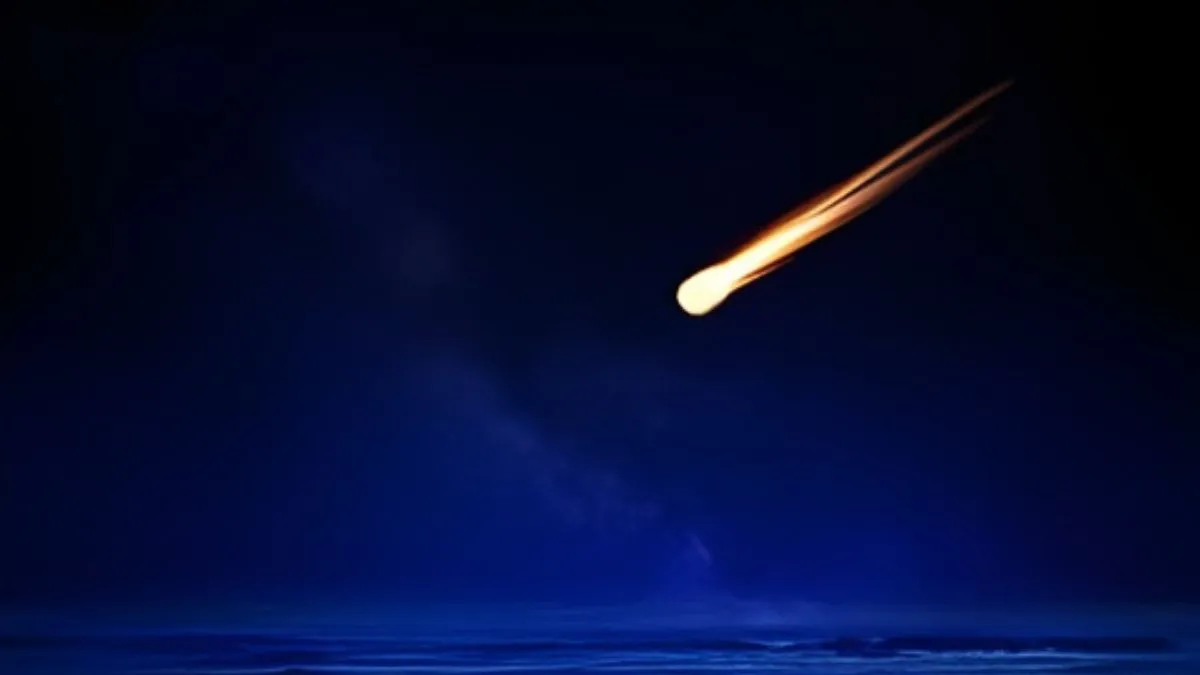
Fireball Meteors are among the most fascinating celestial events visible from Earth. These bright, fiery streaks often grab attention and spark curiosity, especially when they light up the sky unexpectedly.
Recently, a dramatic Fireball Meteors event was observed near Cleveland, reminding us that such occurrences are not as rare as they may seem.
In fact, Earth constantly encounters space debris, most of which burns up harmlessly in the atmosphere.
What Are Asteroids, Meteoroids, and Meteors?
Understanding Fireball Meteors begins with distinguishing between related space objects:
- Asteroids are large rocky or metallic remnants left over from the formation of the solar system about 4.6 billion years ago.
- Meteoroids are smaller fragments that break off from asteroids or comets.
- Meteors refer to the streaks of light produced when these fragments enter Earth’s atmosphere and burn due to friction.
When a meteor shines brighter than the planet Venus, it is classified as a Fireball Meteors event. If any part of it survives the journey and lands on Earth, it becomes a meteorite.
Recent Example of a Fireball Event
A recent Fireball Meteors sighting in the United States showcased how spectacular these events can be.
The object, estimated to be about 6 feet (1.8 meters) wide and weighing nearly 7 tons, traveled approximately 34 miles (55 kilometers) through the upper atmosphere before disintegrating. It was visible across multiple states, from Wisconsin to Maryland.
Despite its size and brightness, no fragments have been recovered so far, highlighting how efficiently Earth’s atmosphere protects us by breaking down incoming space rocks.
How Common Are Meteors?
Meteors, including Fireball Meteors, are extremely common. Every day, countless meteoroids enter Earth’s atmosphere, creating flashes of light. However, most are too faint or occur in remote areas where they go unnoticed.
There are specific periods called meteor showers, during which meteor activity increases significantly. One of the most famous is the Perseids meteor shower, which occurs annually in mid-August and offers some of the best viewing opportunities.
How Frequent Are Fireball Meteors?
While regular meteors are frequent, Fireball Meteors are less common but still occur regularly. Scientists estimate that several thousand such bright events happen daily in Earth’s atmosphere.
However, most of these go unseen because:
- They occur over oceans or uninhabited regions
- Daylight makes them difficult to detect
- Cloud cover obstructs visibility
Even so, many Fireball Meteors are witnessed and reported. In 2026 alone, at least 10 fireballs have generated over 100 public reports, averaging nearly one significant sighting per week.
Why Do Meteoroids Burn Up Before Reaching Earth?
The reason Fireball Meteors rarely cause damage lies in the extreme conditions they face upon entering Earth’s atmosphere. These objects travel at incredible speeds ranging from 25,000 mph (40,233 km/h) to as high as 160,000 mph (257,495 km/h).
When they collide with atmospheric gases:
- Air compresses rapidly in front of the object
- Temperatures rise dramatically
- The meteoroid begins to melt and fragment
This intense process causes most meteoroids to disintegrate completely before reaching the ground, ensuring safety for life on Earth.
Why Fireballs Capture Public Attention?
The brilliance of Fireball Meteors makes them stand out compared to regular meteors. Their intense brightness, long-lasting trails, and occasional sonic booms make them both thrilling and slightly alarming for observers.
Organizations like the American Meteor Society and the International Meteor Organization encourage people to report sightings. These reports help scientists track and analyze such events more accurately.
Fireball Meteors may appear rare due to their dramatic nature, but they are actually a frequent part of Earth’s interaction with space. Thousands occur daily, though only a fraction are visible to humans.
Thanks to Earth’s protective atmosphere, these fiery visitors usually burn up before causing any harm. Observing a fireball is a reminder of the dynamic universe around us and the constant movement of cosmic debris through our skies.