
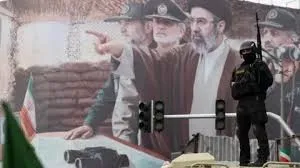
The discussion surrounding Iran regime change has become a central issue following the recent Israel–Iran conflict. For decades, Israel’s prime minister built his political identity around confronting Iran and preventing its regional influence.
Despite the intense military campaign and dramatic rhetoric about reshaping the region, the war may end without the transformation many Israeli leaders once anticipated.
This situation has created a significant political challenge for the government while raising broader questions about the long-term impact of the conflict on Middle Eastern geopolitics.
A Long-Standing Strategic Goal
For many years, Israel’s leadership portrayed Iran as the country’s most dangerous strategic rival. The idea of Iran regime change became a key narrative in discussions about national security and regional stability.
Throughout his long political career, the prime minister consistently warned about Iran’s growing influence and nuclear ambitions. When the recent conflict erupted, many supporters believed the moment had finally arrived for a decisive confrontation that could lead to Iran regime change and fundamentally alter the balance of power in the region.
Government officials described the war as a historic turning point. Statements from military and political leaders emphasized that the conflict was about securing Israel’s future and ensuring long-term security for generations.
Framing the War as a Historic Victory
Even as the prospect of Iran regime change becomes less likely, Israeli leaders are emphasizing the broader achievements of the war. Military officials argue that the campaign has already reshaped regional dynamics and weakened Iran’s strategic position.
Senior figures within the defence establishment have described the operation as one designed to safeguard national survival and protect the country’s future. The message from officials is clear: even without regime change in Iran, the conflict has significantly strengthened Israel’s strategic standing.
Political analysts note that the government is working hard to present the outcome as a success story. Public statements repeatedly stress that the Middle East’s power balance has shifted, suggesting that the war achieved its main objectives despite the absence of a dramatic political transformation inside Iran.
The Vision Behind Iran Regime Change
The concept of Iran regime change was not simply about leadership inside Iran. Supporters believed such a shift could have far-reaching consequences across the Middle East.
Iran has long provided financial support, training, and weapons to several groups that oppose Israel. A political transformation in Tehran could potentially weaken those alliances and reduce the resources available to these organizations.
For Israeli policymakers, Iran regime change therefore represented a strategic opportunity to limit regional threats and reshape security dynamics from Lebanon to Gaza.
However, analysts increasingly believe that such a scenario is unlikely to occur in the near future, especially without internal political movements inside Iran capable of forcing a transformation.
Shifting Expectations After the Conflict
The early phase of the war generated speculation that Iran regime change might be possible. Some leaders even called on the Iranian population to seize the moment and challenge their government.
During the conflict, a major air strike killed Iran’s Supreme Leader, dramatically escalating tensions and fueling debate about the future of the country’s leadership. At that time, some observers believed the event could trigger widespread political upheaval.
Yet months later, the anticipated Iran regime change has not materialized. Instead, the Iranian political system appears to have adapted to the crisis while maintaining its core structure.
As a result, expectations are gradually shifting toward a scenario where the war ends without the sweeping political transformation once discussed by many leaders.
Domestic Political Pressure
The fading possibility of Iran regime change is creating new political challenges at home. Critics argue that the government raised expectations about what the war could achieve.
Opposition figures and commentators now question whether the conflict delivered the transformative results that were promised during its early stages.
Supporters of the government respond that focusing solely on Iran regime change ignores the broader strategic achievements of the military campaign. They argue that weakening Iran’s capabilities and demonstrating military strength are major accomplishments on their own.
Nevertheless, the political debate continues, and public opinion will likely play a crucial role in shaping the government’s next steps.
Changing the Middle East Without Regime Change
In recent statements, leaders have insisted that the region has already been transformed by the conflict. According to this narrative, the war altered power dynamics even without Iran regime change.
Officials claim that Iran’s military infrastructure has suffered major damage and that its regional influence has been reduced. From this perspective, the war succeeded in shifting the strategic balance in Israel’s favor.
Whether this interpretation will satisfy critics remains uncertain. Many observers believe the long-term consequences will only become clear over time as the region adjusts to the aftermath of the conflict.
The debate surrounding Iran regime change highlights the complex relationship between military success and political expectations.
While the recent war significantly impacted regional dynamics, it may not deliver the sweeping transformation some leaders envisioned.
As hopes of Iran regime change fade, the government now faces the challenge of convincing the public that the conflict still achieved meaningful strategic goals.
The coming months will likely determine how this narrative evolves and whether the war ultimately strengthens or weakens political support at home.