
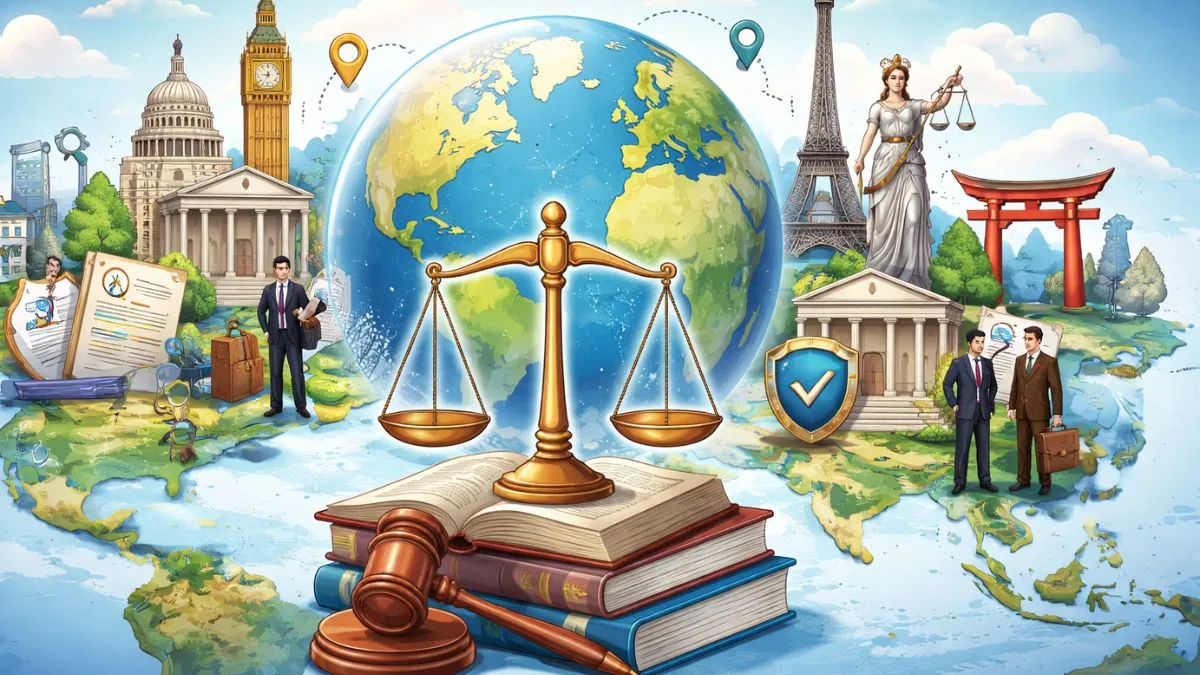
The legal system is the foundation of order and governance in every country. It establishes rules that guide behaviour, resolve disputes, and protect rights. Governments rely on the legal system to regulate social interactions, enforce laws, and maintain justice within society.
Although each nation has its own unique laws and institutions, most countries follow structured frameworks that determine how laws are created, interpreted, and enforced.
Understanding how a legal system operates helps individuals recognize their rights, responsibilities, and the role of courts and legal authorities in maintaining fairness.
What Is a Legal System?
A legal system refers to the organized framework of laws, institutions, procedures, and authorities that govern a society. It determines how rules are developed, interpreted, and applied to resolve conflicts or regulate behaviour.
Every legal system includes three essential components:
- Law-making bodies that create legislation
- Courts that interpret and apply laws
- Enforcement agencies that ensure compliance
These elements work together to maintain stability and protect the rights of individuals and organizations.
Major Types of Legal Systems Around the World
Different countries have developed distinct legal traditions based on history, culture, and political structures. The most common forms of the legal system include the following.
Civil Law System
The civil law system is one of the most widely used legal frameworks globally. It relies heavily on written codes and statutes that clearly outline legal rules.
Judges in civil law jurisdictions primarily interpret and apply these codified laws rather than relying heavily on previous court decisions. Many countries in Europe, Latin America, and Asia operate under this structured legal system model.
Common Law System
The common law tradition developed in England and spread to several countries through historical influence. In this system, court decisions and judicial precedents play an important role in shaping the legal system.
Judges examine past rulings to guide decisions in similar cases. This approach allows the law to evolve gradually as courts interpret new situations.
Religious Law System
Some nations base parts of their legal system on religious doctrines or sacred texts. Religious law influences legal practices related to personal matters such as marriage, inheritance, or family relations.
Examples include systems influenced by Islamic law, Hindu law, or other religious traditions that operate alongside national legislation.
Customary Law System
Customary law develops from traditional community practices and cultural norms. These unwritten rules guide behaviour and dispute resolution in many indigenous or rural communities.
Although customary law often operates locally, it may still interact with the formal legal system of a country.
Structure of Courts in a Legal System
Courts play a central role in interpreting laws and ensuring justice. A typical legal system contains multiple levels of courts designed to handle different types of cases.
Trial Courts
Trial courts are the first level of the judiciary. They examine evidence, hear arguments, and determine facts. Most civil and criminal cases begin in these courts.
Appellate Courts
If a party disagrees with a trial court decision, they may appeal to a higher court. Appellate courts review whether legal procedures and interpretations were correctly applied.
Supreme or Constitutional Courts
At the top of the judicial hierarchy is usually the highest court in the country. This court interprets constitutional principles and ensures that laws comply with national legal frameworks.
Lawmaking and Legislation
The process of creating laws is another fundamental aspect of governance. Legislatures or parliaments typically draft and pass laws that regulate public behavior.
In a functioning legal system, legislation goes through several stages including proposal, debate, approval, and enactment. Once enacted, these laws become legally binding and enforceable throughout the country.
Governments may also delegate authority to regulatory agencies that develop detailed rules supporting broader legislation.
Legal Institutions and Their Roles
Many institutions work together to maintain order and ensure that laws are followed.
Law Enforcement Agencies
Police and investigative authorities enforce legal rules and investigate potential violations. Their work helps ensure that the legal system functions effectively by identifying and preventing crime.
Prosecutors and Defense Lawyers
Prosecutors represent the state in criminal cases, while defense attorneys protect the rights of accused individuals. Their arguments help courts reach fair and balanced decisions.
Legal Professionals and Advisors
Lawyers, judges, and legal scholars play essential roles in interpreting laws and guiding individuals or organizations through complex legal procedures.
Together, these professionals ensure that the legal system operates efficiently and transparently.
Why Legal Systems Matter in Society?
A stable legal system is essential for protecting rights, resolving disputes, and maintaining public trust. Without clear legal rules, societies would struggle to manage conflicts or regulate behaviour.
Legal systems also support economic growth by creating predictable rules for businesses and contracts. When individuals trust the law, they are more likely to participate confidently in social, political, and economic activities.
The legal system forms the backbone of governance in modern societies. It provides the rules and institutions necessary to maintain order, protect rights, and resolve disputes fairly.
From courts and legislatures to enforcement agencies and legal professionals, every component contributes to a structured framework that supports justice and accountability. Understanding how legal systems operate worldwide allows individuals to better appreciate the importance of law in shaping stable and fair communities.
FAQs
What is the purpose of a legal system?
The main purpose of a legal system is to create rules, resolve disputes, protect rights, and ensure justice within a society.
What are the main types of legal systems?
The most common legal systems include civil law, common law, religious law, and customary law traditions.
Why are courts important in a legal system?
Courts interpret laws, resolve disputes, review legal decisions, and ensure that laws are applied fairly and consistently.