
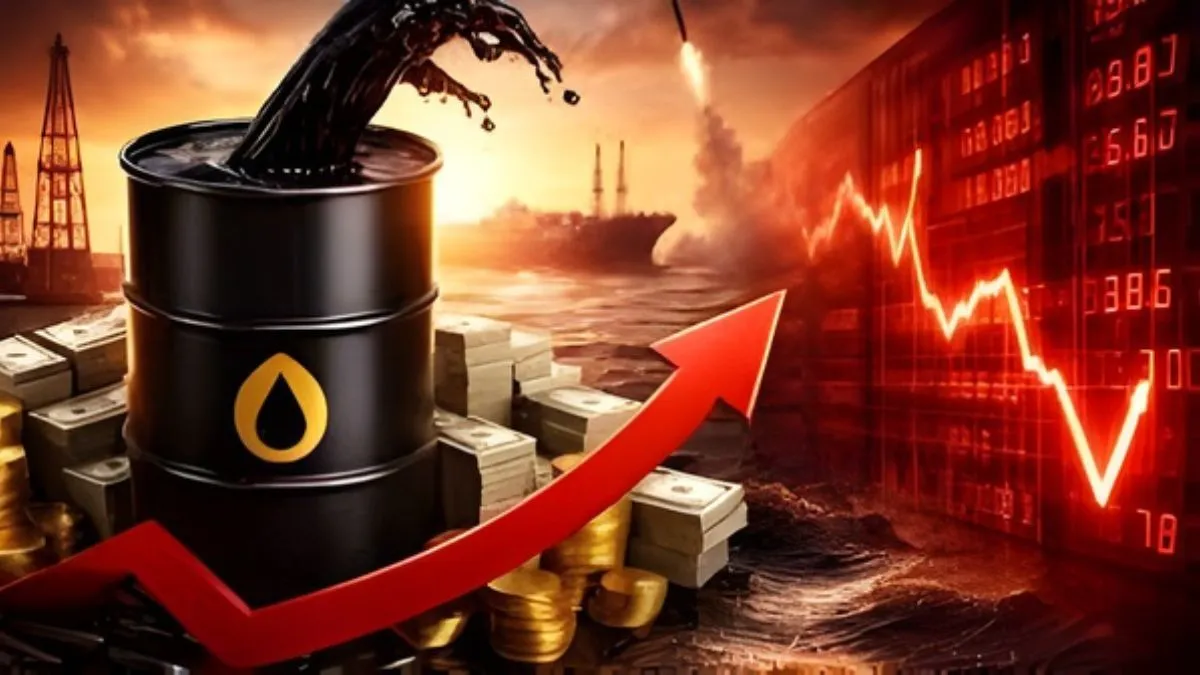
Oil prices fall after a volatile trading session as global markets reacted to escalating Middle East tensions and developments around the Strait of Hormuz.
Despite earlier gains that pushed Brent crude above $119 per barrel, prices reversed direction following statements from Benjamin Netanyahu about efforts to reopen the crucial oil transit route.
The situation highlights how geopolitical risks continue to shape global energy markets.
Sharp Price Movements in Global Oil Markets
During Thursday’s trading session, oil prices fall after initially surging due to supply concerns.
Brent crude futures for May delivery climbed over $119 before settling at $108.65 per barrel. Meanwhile, U.S. West Texas Intermediate (WTI) crude slipped to $96.14 after earlier gains.
The reversal came after Israel indicated it was assisting in reopening the Strait of Hormuz, a vital passage responsible for transporting nearly 20% of the world’s oil supply. This development eased fears of prolonged disruptions, leading to a pullback in prices.
Geopolitical Tensions Drive Market Volatility
The primary driver behind the fluctuations is the ongoing conflict involving Iran, Israel, and regional players. Benjamin Netanyahu stated that Iran’s capabilities to enrich uranium and develop ballistic missiles had been significantly weakened. He also suggested that the conflict might end sooner than expected.
Simultaneously, U.S. officials emphasized reopening the Strait of Hormuz as a top priority. Energy leaders, including representatives from the American Petroleum Institute, stressed the lack of alternatives to this critical shipping route.
These developments contributed to the sentiment that supply disruptions might be temporary, causing oil prices fall after initial spikes.
Impact of Iranian Strikes on Energy Infrastructure
Iranian missile attacks caused “extensive damage” to Ras Laffan Industrial City, the world’s largest LNG export hub operated by QatarEnergy. The attack reportedly reduced Qatar’s liquefied natural gas export capacity by 17%.
Emergency teams quickly controlled fires at the facility, and no casualties were reported. However, the damage raised serious concerns about global gas supply, pushing European gas prices higher.
Qatar condemned the strikes as a violation of sovereignty and warned of potential responses under international law. These tensions initially supported higher oil prices, but optimism around reopening supply routes led to a reversal, and again oil prices fall.
Strait of Hormuz: A Critical Energy Lifeline
The Strait of Hormuz remains central to global energy security. With tanker movements significantly disrupted, the blockage created a supply shock in global markets.
India, heavily dependent on energy imports, is actively negotiating with Iran to allow safe passage for its vessels. According to officials, two ships have already successfully crossed, while efforts continue for more.
As reopening efforts progress, confidence in supply restoration has improved, contributing to why oil prices fall despite ongoing conflict.
Natural Gas and Fuel Markets React
While crude oil prices retreated, natural gas markets showed upward momentum. European benchmark gas prices at the Dutch TTF hub surged over 11%, reflecting concerns about LNG supply disruptions.
In the U.S., natural gas prices rose modestly to $3.116 per million British thermal units, while gasoline futures hit nearly a four-year high. These mixed signals indicate that while crude markets are stabilizing, gas markets remain under pressure.
Still, broader expectations of improved supply logistics ensured that oil prices fall from their peak levels.
Regional Escalation Raises Long-Term Risks
The conflict has also drawn in other regional powers. Israel’s strike on Iran’s South Pars gas field triggered retaliatory missile attacks, increasing tensions across the Middle East.
Countries like Saudi Arabia and the UAE remain on high alert, while Qatar had already suspended LNG production earlier due to drone strikes. As the world’s second-largest LNG exporter, Qatar plays a critical role in global energy supply.
Despite these risks, market optimism surrounding supply recovery continues to outweigh immediate fears, contributing again to why oil prices fall in the short term.
The recent market movements show how sensitive global energy prices are to geopolitical developments.
Although attacks on key infrastructure initially drove prices higher, reassurance about reopening the Strait of Hormuz helped calm markets. As a result, oil prices fall after reaching temporary highs.
Moving forward, the balance between geopolitical risks and supply restoration will determine the direction of oil markets. Stability in shipping routes and de-escalation of conflict will be crucial in preventing further volatility.