
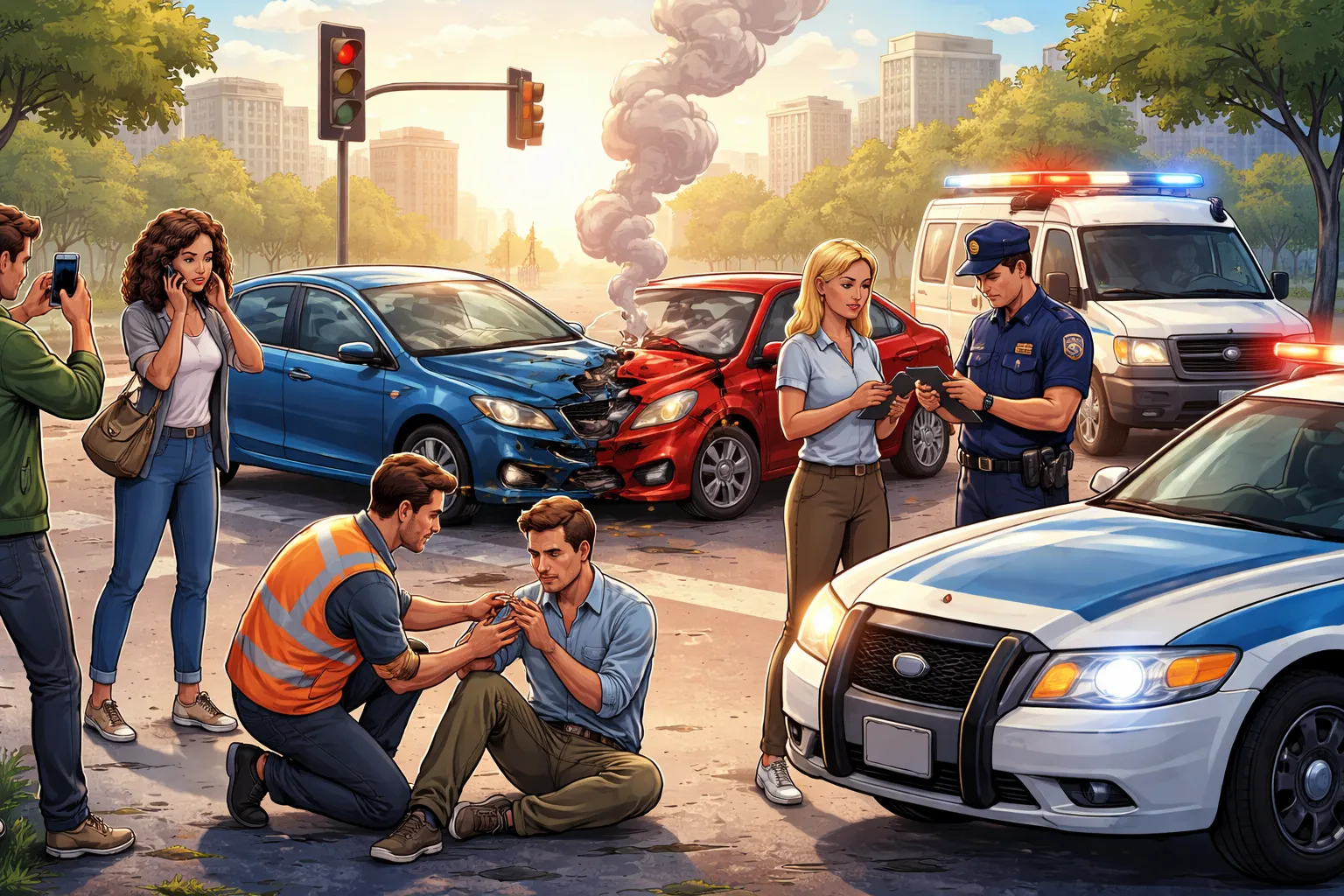
Car accidents can happen unexpectedly and often leave people feeling stressed, confused, and unsure about what to do next. Even a small collision can lead to complications if the situation is not handled properly.
Knowing the correct steps to take immediately after an accident can help protect your health, your legal rights, and your financial interests.
Whether the accident is minor or serious, responding calmly and following the proper procedures can make a big difference. The steps below outline what you should do after being involved in a road accident to ensure safety and proper documentation.
1. Seek Immediate Medical Attention if There Are Injuries
The first and most important priority after any accident is the safety and health of everyone involved. If the collision results in serious injuries, you should immediately seek medical assistance. Call emergency services or ask someone nearby to call for help right away.
Even if the injuries appear minor at first, it is still wise to get medical attention as soon as possible. Some injuries, such as internal bleeding, head trauma, or whiplash, may not show symptoms immediately but can become serious later.
Receiving medical treatment promptly also creates medical records that may be necessary if you need to file an insurance claim or pursue compensation later.
If you are physically able and the injuries are not life-threatening, you may then proceed with the following steps.
2. Contact Emergency Services and Stay at the Scene
After ensuring that everyone is safe, you should contact emergency services immediately. Calling emergency services ensures that both medical professionals and law enforcement are notified about the incident.
Even when the accident appears minor and vehicles seem drivable, it is important not to leave the scene of the accident. Leaving the scene can lead to legal complications and may even be considered a criminal offence in some jurisdictions.
While waiting for emergency responders to arrive, take steps to reduce further risks. Move vehicles out of traffic if it is safe to do so. Turn on your vehicle’s hazard lights to alert approaching drivers. If you have safety flares or reflective warning triangles, place them on the road to make the area visible to oncoming traffic.
Ensuring the safety of everyone at the scene helps prevent additional accidents and injuries.
3. Exchange Contact and Insurance Information
Once everyone is safe and authorities have been notified, you should exchange information with the other driver or drivers involved in the accident. This information is essential for insurance companies when determining responsibility and handling claims.
The information you should collect includes:
- Full names of all drivers involved
- Phone numbers and addresses
- Driver’s license numbers
- Vehicle registration details
- Insurance company names and policy numbers
If you do not have your insurance card with you, there is no need to panic. In many places, you can provide proof of insurance later, often within 24 hours at a police station.
Additionally, if there were passengers or witnesses present at the scene, try to obtain their contact details as well. Witness statements can be extremely helpful if there are disputes regarding how the accident occurred.
4. Inform Your Insurance Company Immediately
After the accident, you should notify your insurance company as soon as possible. Most insurance providers require policyholders to report accidents promptly, regardless of how minor they appear.
Providing early notification allows the insurance company to begin evaluating the claim quickly. They may assign a claims adjuster to investigate the situation, assess vehicle damage, and determine coverage.
When reporting the accident, provide accurate and factual details about what happened. Avoid speculation or assumptions about fault. The insurance company will conduct its own investigation before making a decision.
Prompt communication with your insurer helps ensure that the claims process moves smoothly and that you receive the support you need.
5. Obtain an Official Police Report
An official police report is one of the most important pieces of documentation following a car accident. When police officers arrive at the scene, they record key details about the incident, including statements from drivers and witnesses, road conditions, and possible causes of the collision.
This report serves as an objective record of what happened and may play a critical role when filing an insurance claim or handling legal matters.
Even if the accident seems minor, filing a police report can protect you from potential disputes later. Without official documentation, the other party involved could change their version of events or deny responsibility.
Having a police report ensures that there is a reliable record of the accident created by law enforcement.
6. Avoid Admitting Fault at the Scene
After an accident, it is natural to feel emotional or apologetic. However, it is important not to admit responsibility or blame yourself at the scene.
You should focus on sharing factual information only. Statements such as “I’m sorry” or “It was my fault” can sometimes be interpreted as an admission of liability, even if you did not intend them that way.
The full circumstances of the accident may not be clear immediately. For example, you may believe you made a mistake while reversing your vehicle, but later it could be determined that the other driver was speeding or violating traffic rules.
For this reason, limit your discussion of the accident to the police officers and your insurance company. Allow the investigators and insurance professionals to determine responsibility based on the evidence.
Additional Tip: Document the Accident Scene
In addition to the steps mentioned above, gathering evidence at the scene can be extremely helpful.
If you can do so safely, take photographs of:
- Vehicle damage
- The accident location
- Road conditions
- Traffic signs or signals
- Any visible injuries
Photos and videos provide valuable evidence and help insurance companies understand what happened.
Also, try to identify eyewitnesses who saw the accident occur. Their testimony may help clarify the events if there is any disagreement about how the accident happened.
Staying Calm and Following the Right Steps After an Accident
Being involved in a car accident can be frightening and overwhelming, but knowing how to respond can make the situation much easier to manage. The most important priorities are ensuring everyone’s safety, seeking medical attention if needed, and reporting the incident properly.
By contacting emergency services, exchanging information, informing your insurance company, obtaining a police report, and avoiding statements that admit fault, you protect both your legal rights and your financial interests.
Remaining calm and following these steps ensures that the situation is handled responsibly and helps the recovery process move forward smoothly.
FAQs
What should be the first thing to do after a car accident?
The first step is to check for injuries and seek medical assistance immediately if anyone is hurt.
Should I call the police after a minor car accident?
Yes, it is recommended to contact law enforcement even for minor accidents so an official report can be created.
What information should I exchange after an accident?
You should exchange names, contact details, driver’s license numbers, vehicle registration information, and insurance details with the other driver.