
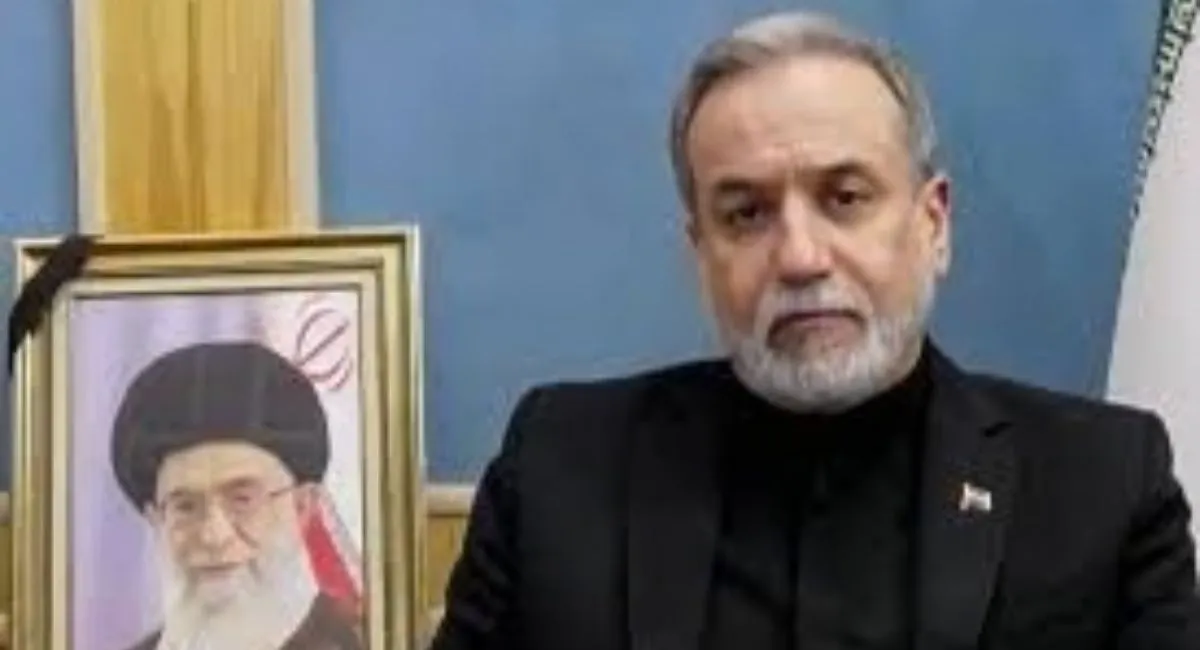
The issue of Iran ceasefire rejection has once again taken center stage in global politics. Iran’s Foreign Minister Abbas Araghchi recently dismissed international appeals for a ceasefire, stating that Iran must continue fighting to protect its citizens and national security.
During an interview on Meet the Press with host Kristen Welker, Araghchi argued that past ceasefire agreements had already been violated and therefore could not be trusted.
The Iran ceasefire rejection highlights the ongoing tensions involving Iran, the United States, and Israel, raising concerns about further escalation in the Middle East.
Iran Ceasefire Rejection Explained
According to Foreign Minister Abbas Araghchi, Iran cannot agree to another temporary truce because previous agreements failed to prevent violence. He claimed that the United States and Israel had already violated the ceasefire that ended the Iran‑Israel 12‑day war.
Araghchi said Iran’s leadership believes the only acceptable solution is a permanent end to the war, not another short-term ceasefire. Until such a resolution is achieved, Iran intends to continue defending itself.
He emphasized that the Iran ceasefire rejection reflects the country’s determination to protect its citizens and national interests.
Allegations of Russian Support for Iran
Recent reports suggest that Russia may be assisting Iran with intelligence about the positions of U.S. military forces in the Middle East. According to several sources, Russian intelligence may have provided information about American military assets, including naval deployments.
When asked about these claims, Araghchi acknowledged that cooperation between Iran and Russia is longstanding. However, he avoided confirming whether Russian intelligence was helping Iran locate U.S. warships.
He simply noted that Russia has been supporting Iran “in different directions,” though he said he lacked detailed information about specific intelligence-sharing activities.
U.S. Response to the Iran Ceasefire Rejection
In another interview on Meet the Press, Mike Waltz addressed the reports about Russia assisting Iran.
Waltz stated that the relationship between Russia and Iran has existed for years and described it as a “symbiotic relationship.”
However, he also argued that any support Russia might be providing has not significantly helped Iran. According to Waltz, the U.S. military has been successfully targeting Iran’s air force, air defence systems, navy, and command structures.
He also said that Donald Trump, currently leading U.S. policy in the conflict, would respond appropriately if Russia’s involvement becomes clearer.Iran’s Message to Neighboring Gulf Countries
Iran’s President Masoud Pezeshkian recently stated that Iran would avoid attacking neighboring Gulf countries unless those nations assisted U.S. or Israeli military operations.
Following Iranian strikes that caused casualties in Kuwait, the United Arab Emirates, and Oman, Pezeshkian issued an apology to the region.
Foreign Minister Araghchi clarified that Iran had not intentionally targeted these countries. Instead, he explained that Iranian attacks were aimed at American military bases located within those nations.
Warnings About Possible U.S. Ground Troops
Araghchi also issued a warning regarding the possibility of U.S. ground forces entering Iran. He said Iranian soldiers are prepared to defend their territory and would respond forcefully to any invasion.
The Iran ceasefire rejection therefore signals Iran’s readiness to escalate the conflict if foreign troops enter its territory.
Dispute Over Iran’s Missile Capabilities
President Donald Trump previously argued that the conflict began partly because Iran was developing missiles capable of reaching the United States.
Araghchi rejected that claim, calling it misinformation. He said Iran deliberately limits its missile range to below 2,000 kilometers to avoid being perceived as a global threat.
Uncertainty Over Iran’s New Supreme Leader
Reports from Iranian state media indicate that the Ali Khamenei died following recent military strikes.
Iran’s Assembly of Experts is responsible for selecting the next supreme leader. However, Araghchi said that no official decision has been announced yet and that many rumors are circulating.
He also rejected suggestions that the United States should influence the selection of Iran’s new leader, stating that Iran will not allow foreign interference in its internal affairs.
U.S. Demands for Unconditional Surrender
President Donald Trump recently posted on Truth Social that the United States would only negotiate with Iran if it agreed to “unconditional surrender.”
According to Mike Waltz, the final meaning of that demand will ultimately be determined by the president as commander in chief.
Waltz said the U.S. goal is to ensure that Iran no longer threatens American citizens, allied countries, or global energy supplies.
The continuing Iran ceasefire rejection remains a major obstacle to diplomatic negotiations and peace efforts.
The Iran ceasefire rejection reflects deep distrust between Iran and Western powers, particularly the United States and Israel. Iranian leaders argue that previous ceasefires failed to stop violence and insist that only a permanent end to the conflict can bring stability.
At the same time, accusations of Russian intelligence support, growing regional tensions, and disputes over missile capabilities have complicated the situation further. As the conflict evolves, the Iran ceasefire rejection will likely continue to influence diplomatic negotiations, regional security, and global political dynamics.