
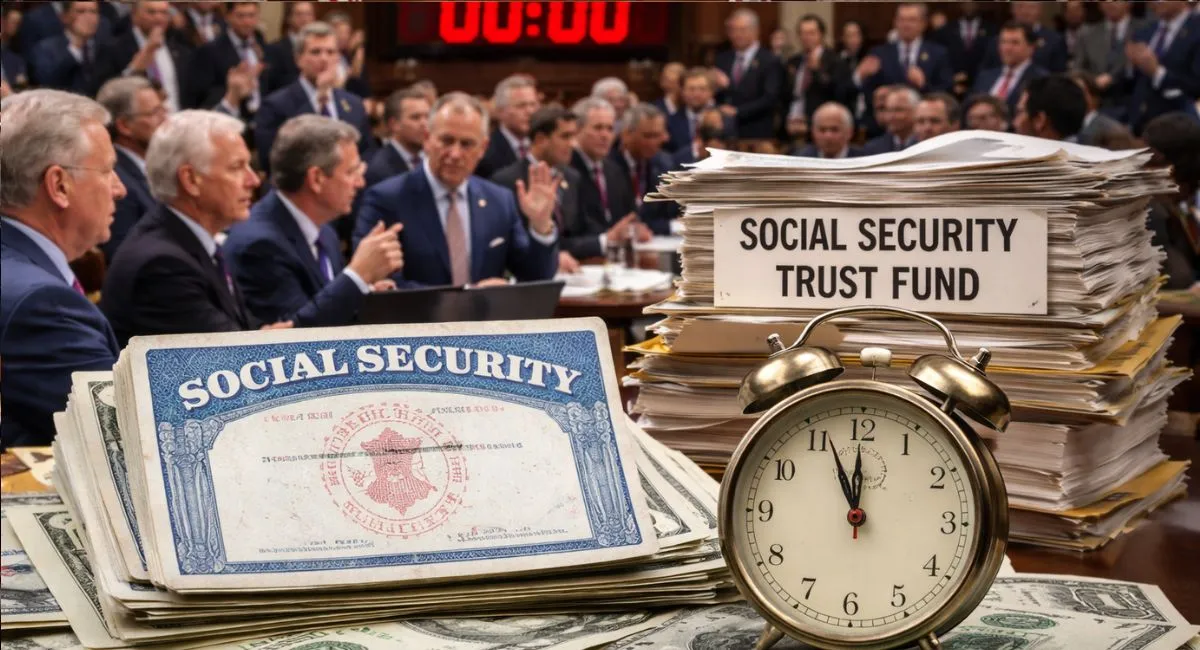
The Social Security Crisis in the United States is becoming increasingly urgent, with just six years remaining before the program faces potential insolvency.
Despite the looming 2032 deadline, lawmakers continue to struggle to reach a unified plan to address the issue.
During a recent Senate Budget Committee hearing, discussions highlighted the seriousness of the Social Security Crisis, but failed to produce a concrete solution.
Policymakers exchanged criticisms and proposals, yet no consensus emerged on how to prevent the program’s financial shortfall.
Risk of Benefit Cuts by 2032
If no legislative action is taken, the ongoing Social Security Crisis could lead to automatic benefit reductions of approximately 24% starting in 2032. This scenario would significantly impact millions of Americans who depend on these payments for their daily needs.
According to data from AARP, nearly 40% of Americans aged 65 and older rely on Social Security for at least half of their income. This statistic underscores the severity of the Social Security Crisis and the potential consequences of inaction.
Senate Hearing Highlights Lack of Agreement
The Senate hearing drew attention to deep divisions among lawmakers over how to resolve the Social Security Crisis. While there is general agreement that the system is under strain, opinions vary widely on the best path forward.
Some proposed increasing payroll taxes, while others suggested adjusting benefits or raising the retirement age. However, these ideas remain points of contention, reflecting the complexity of the Social Security Crisis and the political challenges involved in fixing it.
Why the Social Security Crisis Matters?
The Social Security Crisis is not just a policy issue—it directly affects the financial stability of millions of retirees. Without timely intervention, beneficiaries could face reduced income, leading to increased economic hardship among older populations.
The urgency of the Social Security Crisis continues to grow as the deadline approaches, making it critical for lawmakers to move beyond debate and toward actionable solutions.
The Social Security Crisis represents one of the most pressing financial challenges facing the United States today.
With insolvency projected by 2032 and significant benefit cuts on the horizon, the lack of agreement among lawmakers is deeply concerning.
Immediate and decisive action is essential to safeguard the future of Social Security and protect millions of Americans who depend on it.
FAQs
What is the Social Security Crisis?
The Social Security Crisis refers to the projected inability of the system to pay full benefits by 2032 due to funding shortfalls.
How much could benefits be reduced?
If the Social Security Crisis is not addressed, benefits may be cut by about 24% starting in 2032.
Why haven’t lawmakers fixed the issue yet?
The Social Security Crisis involves complex policy decisions, and political disagreements have prevented a unified solution so far.