
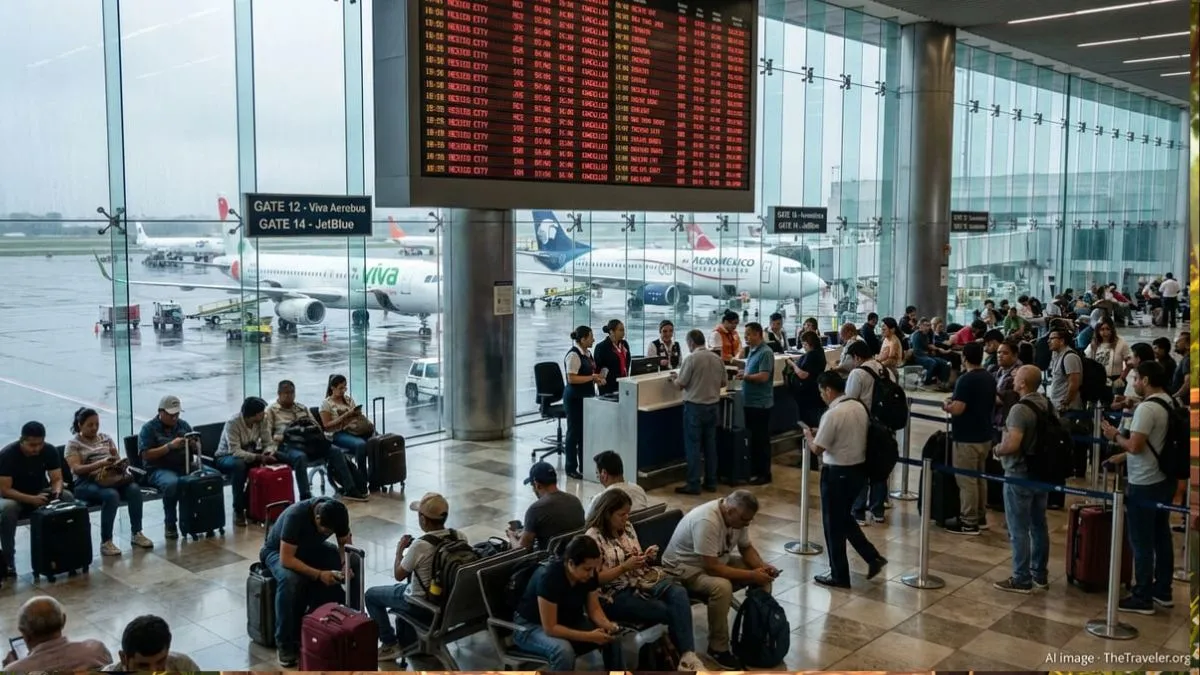
Mexico Flight Disruptions have caused significant inconvenience for travelers as operations at key airports in Mexico faced widespread delays and cancellations on March 20, 2026.
A total of 63 disruptions were reported, impacting major airlines and busy domestic routes, leaving passengers stranded and schedules uncertain.
Overview of Flight Disruptions in Mexico
The recent Mexico Flight Disruptions involved 54 delays and 9 cancellations, highlighting a strong imbalance toward delay-heavy operational issues.
These disruptions were recorded across three major airports, affecting airlines such as Volaris, VivaAerobus, AeroMéxico, Emirates, Lufthansa Cargo, and Mexicana.
While cancellations remained relatively low, delays were widespread, pointing toward congestion and operational inefficiencies rather than complete shutdowns.
High-traffic domestic routes connecting Guadalajara, Tijuana, and Mexico City were particularly affected.
Most Impacted Airports
Don Miguel Hidalgo y Costilla International Airport
This airport experienced the highest number of disruptions, reporting 25 delays and 4 cancellations. Most delays were linked to Volaris, while cancellations were primarily attributed to VivaAerobus. The pattern indicates both scheduling pressure and operational challenges.
General Abelardo L. Rodriguez International Airport
Closely following, this airport recorded 24 delays and 3 cancellations. Volaris again dominated delay numbers, while VivaAerobus accounted for cancellations, reinforcing a consistent airline-specific disruption trend.
Mexico City Santa Lucía Airport
This airport saw comparatively fewer issues, with 5 delays and 2 cancellations. Despite lower traffic, disruptions were distributed across multiple airlines, including Emirates and Lufthansa Cargo, reflecting broader network involvement.
Airlines Facing the Most Disruptions
Volaris
Volaris emerged as the most affected airline in terms of delays, reporting 37 delayed flights. Notably, the airline did not record any cancellations, suggesting operational slowdowns rather than severe breakdowns.
VivaAerobus
VivaAerobus experienced 10 delays and 8 cancellations, making it responsible for all cancellations in this dataset. This indicates deeper operational challenges compared to other carriers.
Other Airlines
- Emirates reported 1 delay and 1 cancellation
- AeroMéxico recorded 2 delays
- Lufthansa Cargo and Mexicana were also affected with minor disruptions
These figures highlight that while some airlines faced limited disruptions, the impact was widespread across the aviation network.
Key Causes and Patterns Behind the Disruptions
The Mexico Flight Disruptions reveal a pattern dominated by delays rather than cancellations. This suggests congestion, scheduling inefficiencies, and operational strain across busy domestic corridors rather than extreme conditions like weather or emergencies.
Additionally, repeated delays across multiple airlines and airports indicate a system-wide issue rather than isolated incidents. High passenger traffic between major cities further intensified the problem.
Impact on Travellers
Passengers travelling through Guadalajara, Tijuana, and Mexico City faced significant inconvenience due to these Mexico Flight Disruptions. Delays led to missed connections, extended waiting times, and uncertainty in travel plans.
For many travellers, especially those on connecting flights, even minor delays resulted in cascading disruptions, highlighting the importance of buffer time in travel itineraries.
What Passengers Should Do During Disruptions?
To manage situations like Mexico Flight Disruptions, travelers can take the following steps:
- Check real-time flight updates before leaving for the airport
- Stay connected with airlines like Volaris or VivaAerobus for rebooking options
- Arrive early to account for delays and long queues
- Keep travel documents easily accessible for quick processing
- Monitor airport announcements for gate changes and boarding updates
- Plan flexible itineraries with buffer time between connections
Being proactive can significantly reduce the stress caused by unexpected travel disruptions.
Operational Insights
The overall trend in Mexico Flight Disruptions highlights a delay-heavy environment driven by operational congestion. While cancellations were limited, their concentration within one airline suggests targeted issues rather than widespread failures.
Meanwhile, delays across multiple carriers indicate systemic pressure within Mexico’s aviation network, especially in high-demand routes connecting major urban centers.
The recent Mexico Flight Disruptions underline the challenges faced by busy aviation networks during peak operational periods. With 63 affected flights, the situation reflects a broader issue of congestion and airline-specific inefficiencies. While delays dominated the scenario, cancellations were concentrated, offering insight into varying operational capabilities among airlines. For travelers, staying informed and flexible remains the best strategy to navigate such disruptions effectively.