
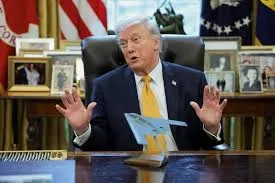
The Trump dyslexia remarks have sparked widespread debate after Donald Trump criticized individuals with learning disabilities while targeting Gavin Newsom.
The comments, which focused on dyslexia, drew sharp backlash from advocacy groups and reignited conversations about leadership, intelligence, and inclusivity in politics.
Trump’s Comments on Dyslexia and Leadership
During a recent interaction at the White House, Trump’s dyslexia remarks gained attention when the president suggested that individuals with learning disabilities should not hold the nation’s highest office. Referring to Newsom with a derogatory nickname, Trump questioned his intelligence and repeatedly highlighted the governor’s admission of having dyslexia.
Trump stated that while he supports individuals with learning disabilities in general, he does not believe such individuals should serve as president. He also labelled Newsom as “dumb,” intensifying the political rhetoric.
These Trump dyslexia remarks have been widely criticized as insensitive and uninformed, particularly given the prevalence of dyslexia in the general population.
Gavin Newsom’s Response and Public Reaction
Gavin Newsom responded swiftly to the Trump dyslexia remarks, mocking Trump for mistakenly referring to him as “President.” He emphasized the importance of democratic elections in his response on social media.
Previously, Newsom had openly discussed his struggles with dyslexia during a public event in Atlanta. He shared that reading speeches is challenging for him, which is why he prefers not to rely on written scripts. His candid remarks were intended to connect with audiences but were later politicized.
In reaction to the Trump dyslexia remarks, Newsom strongly criticized Trump, accusing him of lacking understanding and compassion.
Expert Opinion: Dyslexia and Intelligence
The National Center for Learning Disabilities condemned the Trump dyslexia remarks, calling them harmful and misleading. The organization stressed that dyslexia does not impact a person’s intelligence, decision-making abilities, or leadership potential.
According to experts, dyslexia is a neurological condition that affects reading and language processing. However, it does not limit creativity, problem-solving skills, or critical thinking.
The backlash to the Trump dyslexia remarks highlights a broader issue—misconceptions about learning disabilities and their impact on professional success.
Prevalence of Dyslexia in the United States
Research indicates that dyslexia affects approximately 15% to 20% of Americans. The US Department of Health and Human Services estimates that millions of individuals live with this condition.
Despite its prevalence, the Trump dyslexia remarks have reignited stigma around learning disabilities. Advocacy groups argue that such statements can discourage individuals from seeking support or embracing their differences.
Historical Context: Leaders with Dyslexia
Experts and historians suggest that several prominent leaders may have had dyslexia, including George Washington, John F. Kennedy, and Woodrow Wilson.
These examples challenge the narrative implied by the Trump dyslexia remarks, demonstrating that learning disabilities do not prevent individuals from achieving high levels of leadership.
Political and Social Implications
The Trump dyslexia remarks have intensified political tensions while also drawing attention to broader societal attitudes toward disabilities. Critics argue that such statements reinforce harmful stereotypes and undermine efforts to promote inclusivity.
On the other hand, supporters of Newsom view his openness about dyslexia as a strength, reflecting resilience and authenticity. The controversy has sparked discussions not only about politics but also about education, awareness, and acceptance.
The Trump dyslexia remarks have ignited a significant debate about leadership, intelligence, and inclusivity. While political rivalries often involve sharp criticism, this controversy underscores the importance of understanding and respecting learning differences.
Dyslexia does not define a person’s capabilities, and history shows that individuals with such conditions can excel at the highest levels. Moving forward, the discussion should focus on awareness, empathy, and the value of diverse strengths in leadership.