
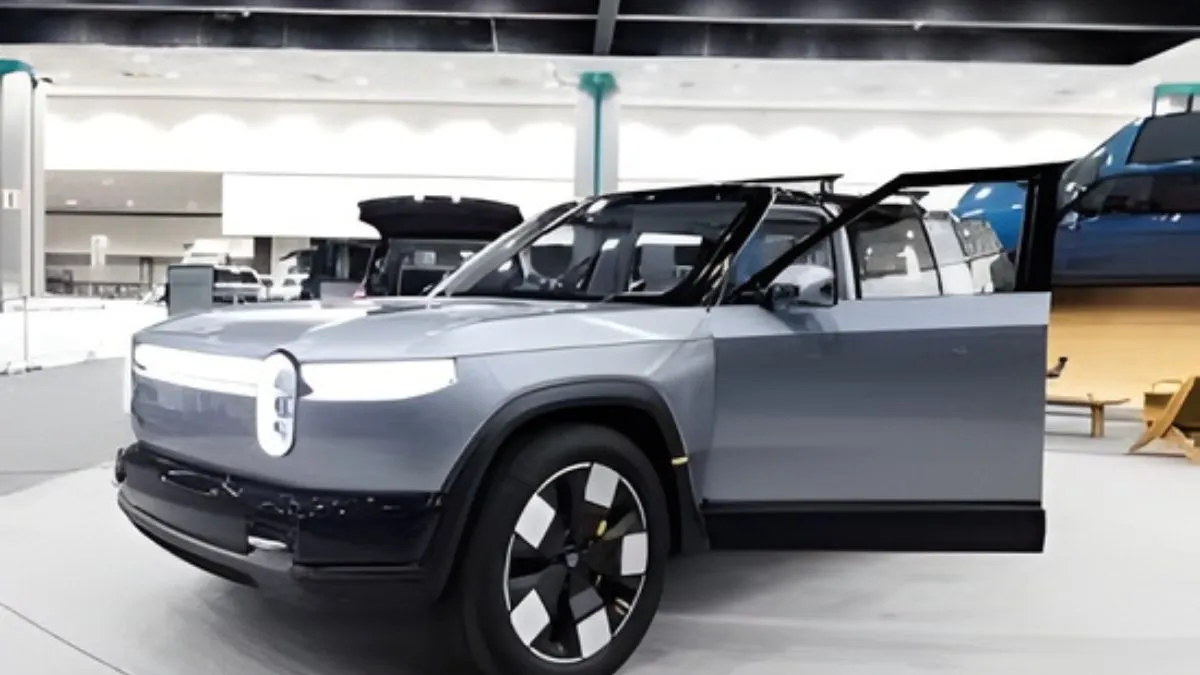
The Uber Rivian Robotaxis partnership marks a major leap in the autonomous mobility space.
In a strategic move, Uber announced plans to invest up to $1.25 billion in Rivian to roll out a large-scale robotaxi network by 2031.
This Uber Rivian Robotaxis initiative reflects the growing competition to dominate the future of transportation.
Deal Overview: Investment and Scale
Under the agreement, Uber Rivian Robotaxis will see an initial investment of $300 million, pending regulatory approvals. The total commitment could reach $1.25 billion through multiple funding stages tied to performance milestones.
The partnership includes:
- Purchase of 10,000 autonomous Rivian R2 vehicles
- Option to expand up to 50,000 robotaxis
- Deployment across 25 cities in the U.S., Canada, and Europe
This Uber Rivian Robotaxis expansion highlights the companies’ ambition to lead the evolving self-driving ecosystem.
Launch Timeline and Market Rollout
The first phase of the Uber Rivian Robotaxis rollout is expected to begin in 2028. Initial deployments are planned in:
- San Francisco
- Miami
These robotaxis will be exclusively accessible through Uber’s ride-hailing and delivery platform, giving the company a competitive edge in urban mobility.
Technology Behind Uber Rivian Robotaxis
The Uber Rivian Robotaxis system will rely on Rivian’s vertically integrated approach, combining hardware, software, and AI-powered systems. CEO RJ Scaringe emphasized advancements such as:
- RAP1 (Rivian Autonomy Processor)
- Multi-modal perception systems
- AI-driven autonomous driving software
These innovations aim to accelerate the scalability and reliability of Uber Rivian Robotaxis, addressing past challenges faced by autonomous vehicle projects.
Market Impact and Industry Competition
The Uber Rivian Robotaxis deal comes amid renewed momentum in the robotaxi sector. Industry players like Waymo currently dominate the U.S. market, while Uber is expanding partnerships with companies such as Lucid Motors, Zoox, Stellantis, and Nvidia.
Investors see autonomous vehicles as a potential trillion-dollar opportunity, making Uber Rivian Robotaxis a key strategic bet for long-term growth.
Stock Market Reaction
Following the announcement:
- Rivian shares rose nearly 10% in premarket trading before closing about 3% higher
- Uber’s stock declined by around 1%
Despite mixed investor reactions, the Uber Rivian Robotaxis initiative signals strong confidence in the future of autonomous mobility.
Previous Investments and Strategic Growth
This deal adds to Rivian’s recent $5.8 billion software partnership with Volkswagen. For Uber, it represents an expansion of its robotaxi ambitions after earlier collaborations with multiple EV and tech companies.
The Uber Rivian Robotaxis strategy reflects a broader shift toward AI-powered transportation solutions.
The Uber Rivian Robotaxis partnership demonstrates a bold step toward redefining urban transportation.
With a planned fleet of up to 50,000 autonomous vehicles, advanced AI technology, and global deployment ambitions, this collaboration positions both companies at the forefront of the robotaxi revolution.
While challenges remain, the scale and investment behind Uber Rivian Robotaxis signal a strong push toward making autonomous ride-hailing a mainstream reality in the coming years.