
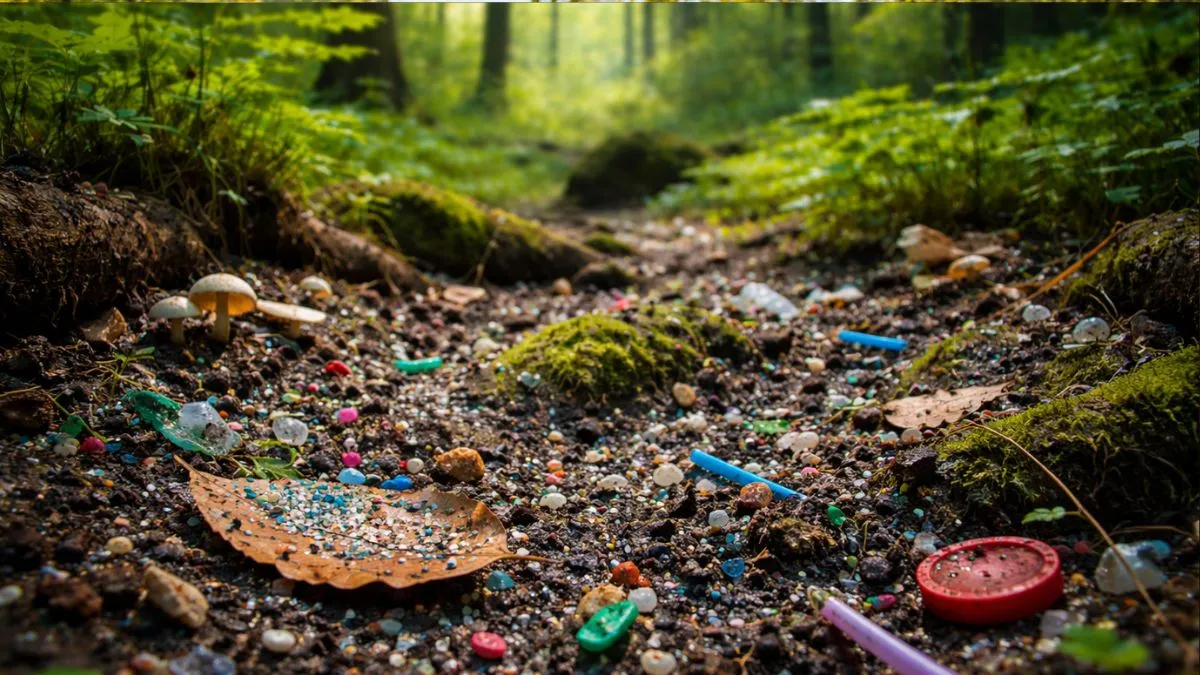
Microplastic Pollution is no longer limited to oceans and urban spaces—it is now reaching even the most remote forest environments.
Scientists are increasingly discovering that these tiny plastic particles are transported through the air and deposited deep within forest ecosystems.
This unexpected spread highlights how Microplastic Pollution has become a global environmental issue affecting even untouched natural landscapes.
How Microplastics Reach Forests?
Traditionally, plastic waste has been associated with littering or water runoff. However, recent findings show that Microplastic Pollution is largely driven by atmospheric movement.
Tiny plastic particles travel long distances through the air before settling on forest canopies.
This process, often described as the “comb-out effect,” occurs when airborne particles land on leaves high in trees.
Accumulation on Leaves and Forest Floor
Leaves act as temporary storage surfaces for airborne plastic fragments. As rain falls, these particles are gradually transferred to the forest floor. During seasonal leaf fall, the accumulated plastics are deposited directly into the soil.
Once on the ground, the particles mix with organic material. The decomposition of leaves helps trap plastics within the soil layers. This continuous cycle ensures that Microplastic Pollution steadily builds up, especially in areas with dense vegetation and seasonal leaf shedding.
Movement of Microplastics in Soil
After reaching the forest floor, microplastics do not remain on the surface. Natural processes, including soil movement and biological activity, push these particles deeper underground.
Fresh leaf litter often contains the highest concentration of plastics. Over time, as decomposition progresses, these particles are integrated into deeper soil layers. This makes Microplastic Pollution a long-term issue, as plastics become embedded within the soil system itself.
Impact on Soil Health and Ecosystems
Forest soil is a complex and living system that supports countless organisms and plays a vital role in nutrient cycling. The presence of Microplastic Pollution raises concerns about potential disruptions to these processes.
Plastic particles may interfere with soil structure, water retention, and microbial activity.
Since these factors are essential for plant growth and ecosystem stability, the long-term effects of Microplastic Pollution could be significant for forest health.
Scientific Study and Findings
Researchers conducted detailed studies in forest regions of Germany to understand the extent of plastic accumulation. Samples were collected from air, leaves, and soil to track how Microplastic Pollution moves through these environments.
Advanced analytical methods revealed that forests have been accumulating airborne plastics since at least the 1950s. This suggests decades of gradual buildup, making forest soils long-term storage zones for Microplastic Pollution.
The findings also confirmed that atmospheric deposition is the primary source, rather than local pollution activities. This emphasizes the widespread and far-reaching nature of plastic contamination.
Forests as Indicators of Airborne Pollution
Forests can now be viewed as natural indicators of environmental contamination. By analyzing plastic levels in forest soils, scientists can estimate how much Microplastic Pollution is present in the atmosphere.
High concentrations of plastics in soil often reflect significant airborne input rather than direct human activity nearby. This makes forests valuable for monitoring global pollution trends and understanding how Microplastic Pollution spreads across regions.
A Growing Environmental Concern
Forests are already under stress due to climate change, drought, and shifting weather patterns. The addition of Microplastic Pollution introduces another layer of environmental risk.
Plastic particles may affect water flow within soil, disrupt microorganisms, and potentially harm plant growth. Moreover, if these particles are present in remote forests, it indicates that humans are likely exposed to them through the air as well.
This expanding presence shows that Microplastic Pollution is not confined to visible waste but is a hidden issue affecting ecosystems worldwide.
The spread of Microplastic Pollution into forest ecosystems reveals the far-reaching impact of plastic waste. What was once thought to be confined to oceans and urban areas is now embedded in natural environments through atmospheric processes.
Forests, acting as both collectors and indicators, highlight the severity of this issue.
Addressing Microplastic Pollution requires global awareness and action, as its effects extend beyond visible pollution and into the very foundation of ecosystems.
FAQs
What is microplastic pollution?
Microplastic pollution refers to tiny plastic particles, often less than 5mm in size, that contaminate air, water, and soil.
How do microplastics reach forests?
They are carried by wind through the atmosphere and settle on leaves before being transferred to the soil.
Why is microplastic pollution harmful to forests?
It can disrupt soil health, affect microorganisms, and potentially interfere with plant growth and ecosystem balance.